At Olin, Co-Curriculars are scheduled activities hosted by a faculty or staff member in a subject they are passionate about themselves. Coby Unger, Senior Shop Manager and Instructor of Fabrication, started "How It's Made IRL," a Co-Curricular where students visit a factory every Thursday morning to learn how things get made in manufacturing settings.
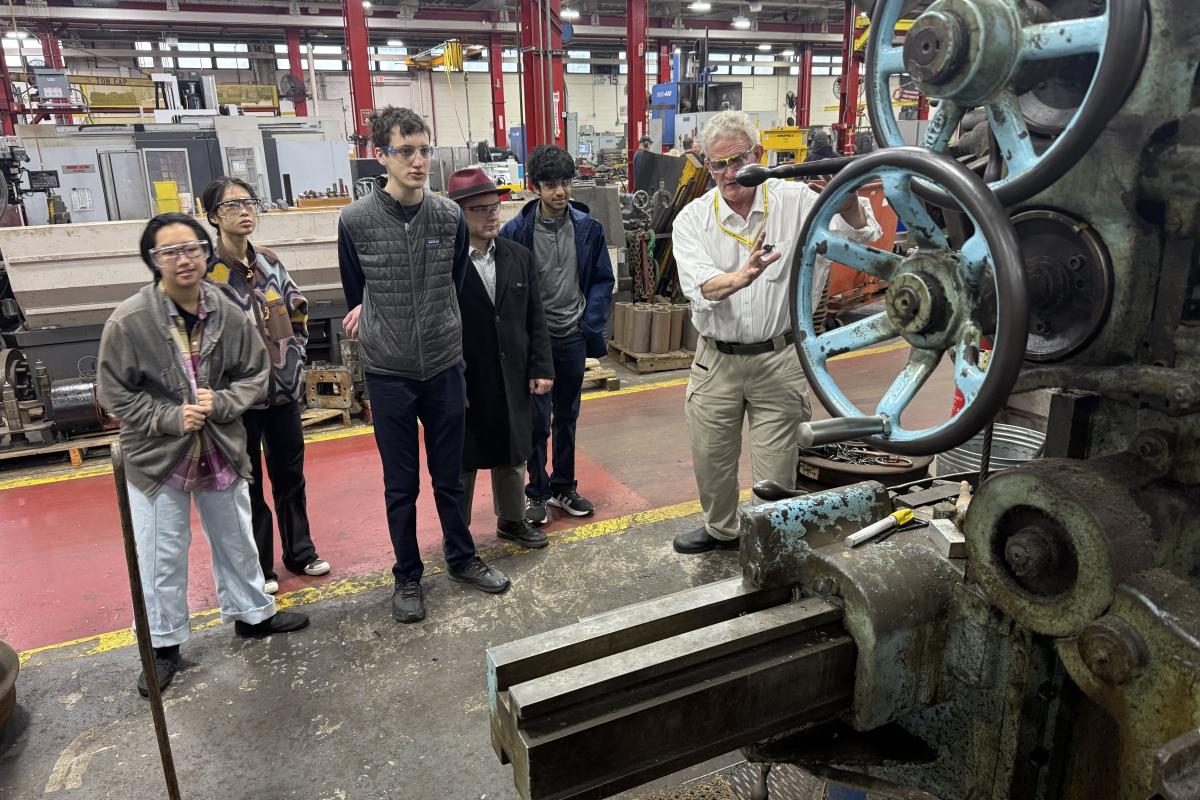
How It's Made IRL students at one of the Massachusetts Bay Transit Authority (MBTA) maintenance facilities.
Companies Unger and his students visited this semester included Novolex/Waddington North America, Multiscale Systems, The Boston Globe, Starrett Tools, The MBTA, Commonwealth Fusion Systems, Dunkin' Donuts, United Tool and Emuge Franken.
Read more from our guest author, Coby Unger:
Our first tour was at Novolex/Waddington North America, an injection molding facility in Chelmsford. We were greeted by our tour guide and plant manager, who, after a quick safety talk, took us into the molding facility. As we donned our eye and ear protection and hair nets, it felt like the place expanded before our eyes. Giant injection molding machines as far as the eye could see. Much of the faculty, it turns out, was below ground. As we walked through the plant, large robotic arms pulled sets of six plates or bowls out at a time from massive injection molding machines. Smaller machines squeezed molten hot plastic into molds shaped for forks, spoons and butter knives. The facility also included metallic plating machines, packaging lines, and printing machines to adorn plates with corporate logos from Amtrak to the Four Seasons. While plastic plates and forks might not be the most exciting of industries to tour, the scale of the facility and the large amount of throughput were truly impressive.
Much to the joy of our students, our tour concluded with a meeting with one of the company’s lead designers, who was personally in charge of designing all the custom spoons for Menchie’s frozen yogurt.
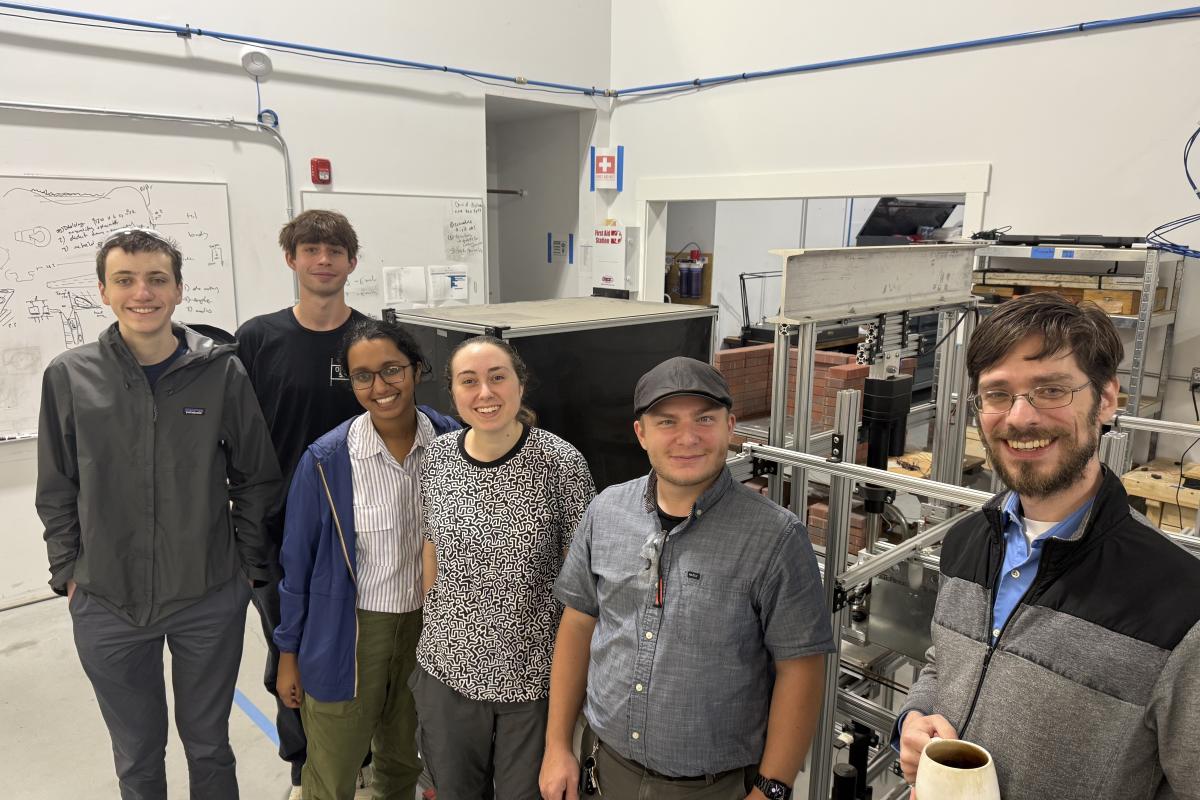
Students at Multiscale Systems in Worcester.
For the second installment of the tour, we visited a much smaller facility in Worcester and met with the founder and CEO of Multiscale Systems.
Multiscale is an engineering and design company integrated with a high-end machine shop. They specialize in non-standard and complex machined parts in specialized materials. Alloys such as Inconel are notoriously expensive and hard to machine, so rather than starting from solid blocks, Multiscale has integrated laser welding as a method of 3D printing into the enclosure of 3 and 5-axis CNC Mills and creates the forms that the CNC mills then cut from. This method both reduces waste and allows them to make parts that would be otherwise impossible to create with standard CNC machining. Multiscale also makes high-strength, low-weight paneling for applications such as trucking.
Having engineering and manufacturing under the same roof allows the company to innovate and iterate quickly, much like we do at Olin.
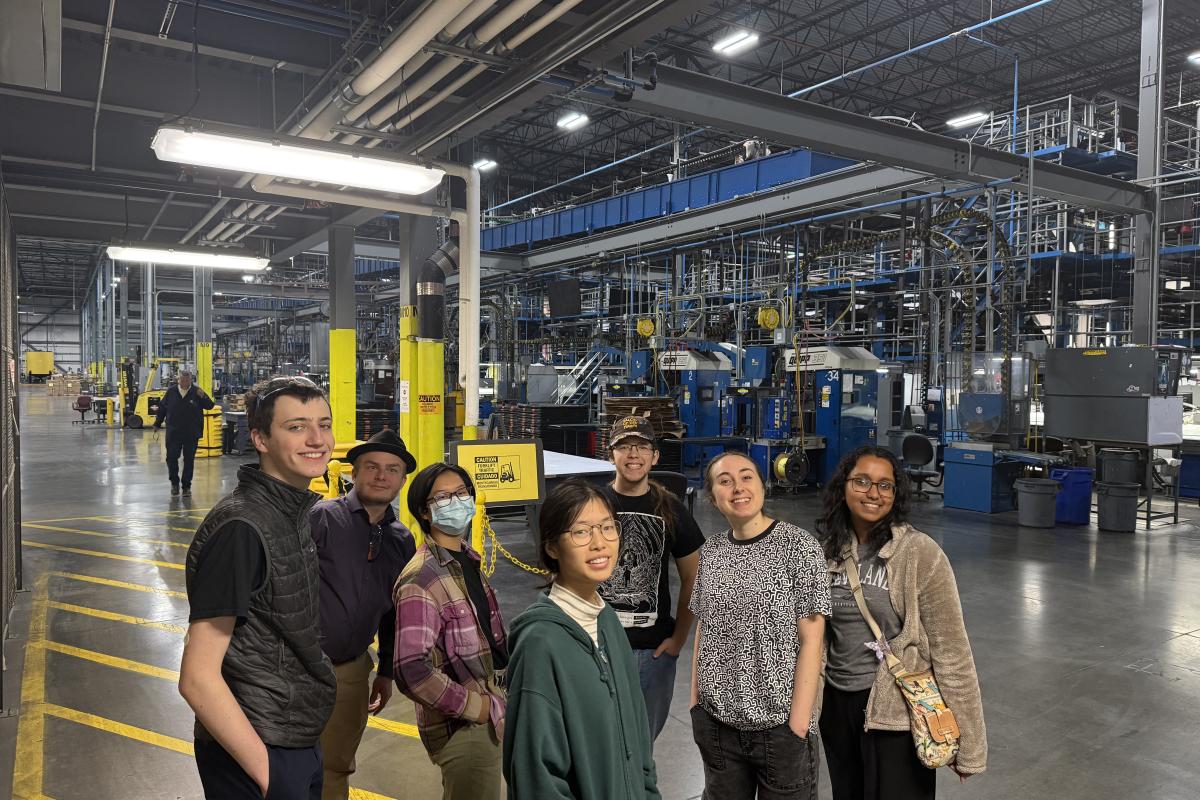
How It's Made IRL Co-Curricular students at the Boston Globe newspaper printing facilities.
Our next tour brought us to the Boston Globe newspaper printing facility in Taunton, where giant rolls of blank paper are printed into thousands of daily papers for distribution as far away as Maine. We learned about digital offset printing, as well as some of the logistics that go into the process of printing papers with news that breaks just hours before the papers hit the newsstands. In order to get the most recent and accurate news to readers, the Boston Globe prints multiple iterations of the paper and is able to swap plates on the machines multiple times per night in order to keep updating headlines, sports scores and other time-sensitive stories.
Our tour guide showed us the high-pressure ink pumps that supply the printing presses and explained how the facility has to be kept at a very consistent humidity and temperature in order to keep the paper running correctly on the presses.
Amazingly, since the machines run only at night to print newspapers, we were able to walk through the machines and up onto the 3-story tall scaffolding around them to see the inner workings of everything from the ink injectors to the paper folders.
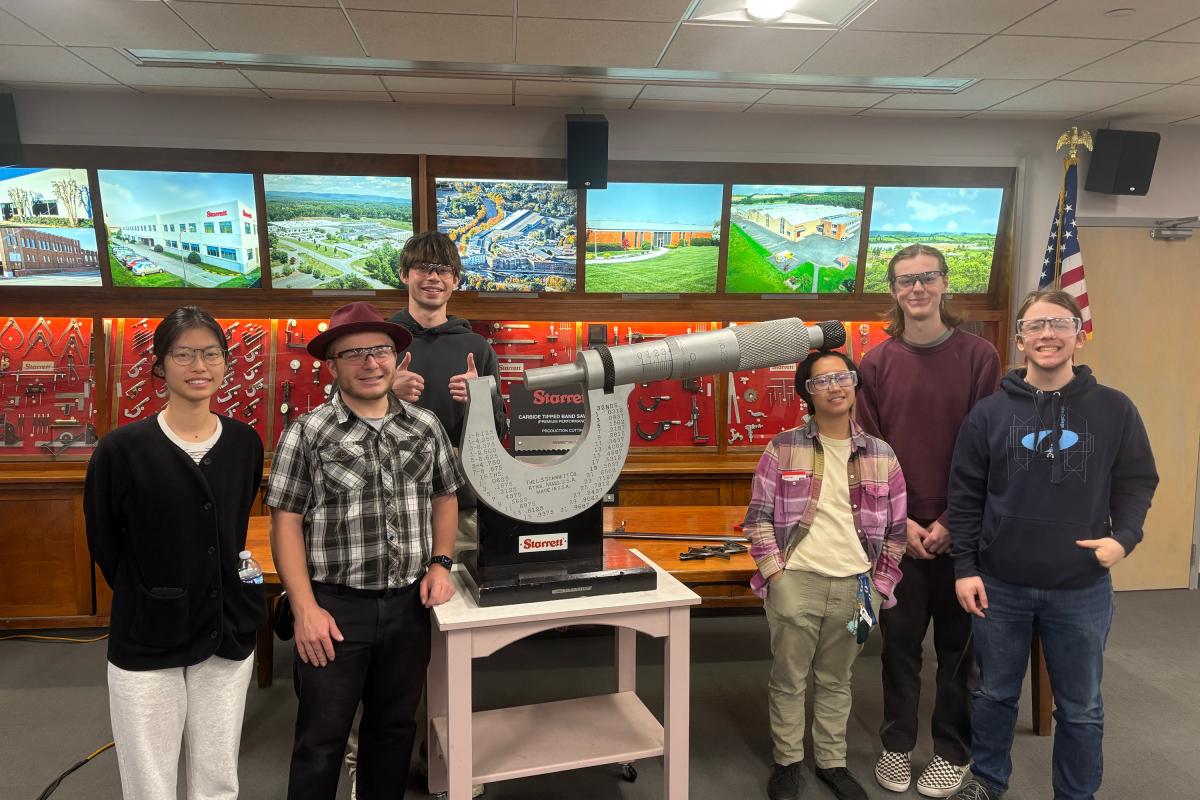
Students stand with the machines at the Starrett Tools Factory.
At the Starrett Tools Factory, we were able to see where some of the most precise and trusted measuring tools in the world are made.
Starrett is particularly impressive in part due to the fact that the company is still headquartered in the building where it was originally founded in 1880. While none of the original machines are still used in production, it is amazing to see some of the older manual machines being used alongside high-tech laser engraving machines and 5-axis CNC mills. Starrett is one of the most trusted brands in measuring tools, and their standards for quality are extremely high. We were even given a tour of the wood shop, where the crates that move parts around the factory are made.
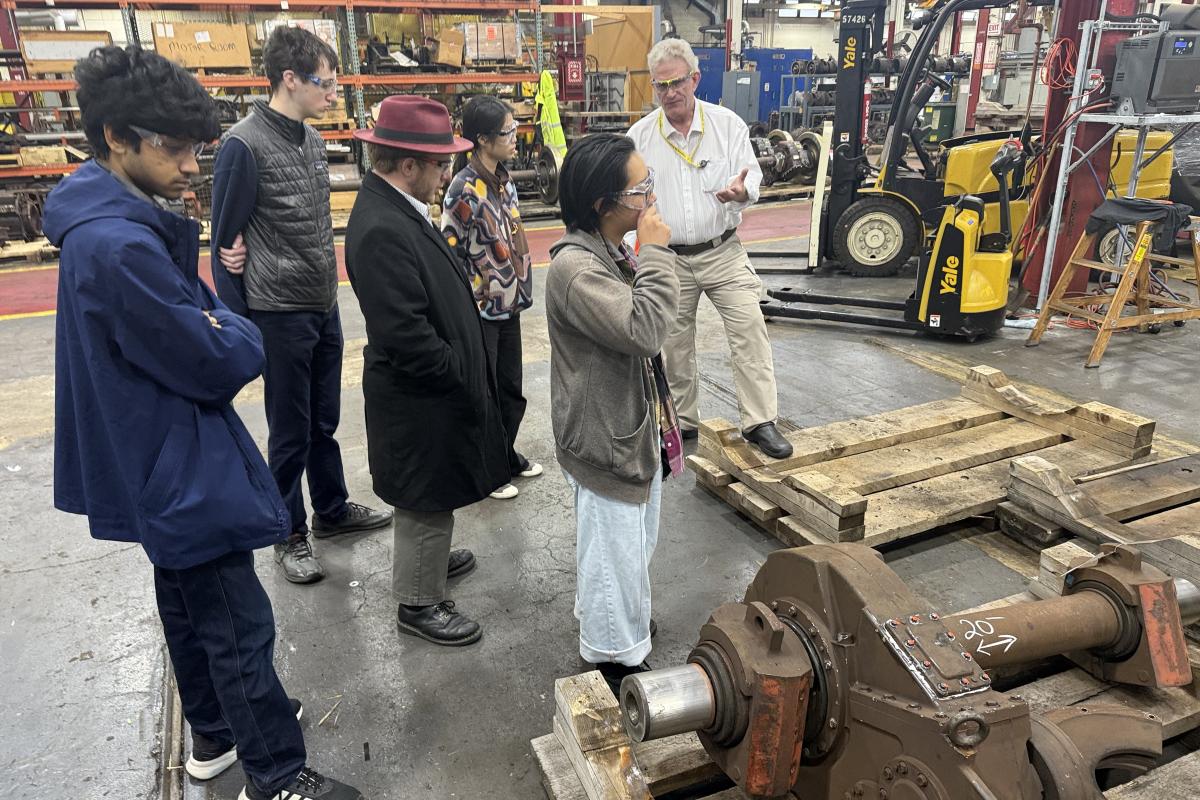
Students at one of the Massachusetts Bay Transit Authority (MBTA) maintenance facilities.
Much to the excitement of some of our train-enthusiast students, our next tour was at one of the Massachusetts Bay Transit Authority (MBTA) maintenance facilities.
Once again, this tour included a sizable history lesson as the MBTA is the oldest subway system in the country, and there is a wide variety of rolling stock on the tracks, some up to 70 years old. The Everett maintenance yard mainly focuses on wheels, bearings, compressors and electric motors, and ironically, the parts are brought in by truck from other maintenance yards. We saw giant vertical lathes for reworking train wheels, winding machines for fixing electric motors, and enormous bearing presses to put train axles back together after repair.
As the weather began to turn and November was upon us, we embarked on our most high-tech tour of the semester at Commonwealth Fusion Systems. Manufacturing at Commonwealth is brought to another level while attempting to create the first fully functional nuclear fusion reactor. Much of the production at this phase of their operation is focused on the giant magnets and cooling systems necessary for the incredibly high current load the reactor is expected to encounter.
As the current project at CFS is a giant proof-of-concept, our tour guides explained how, as phases of the production are completed, the manufacturing floor gets reconfigured and updated for the next phase.
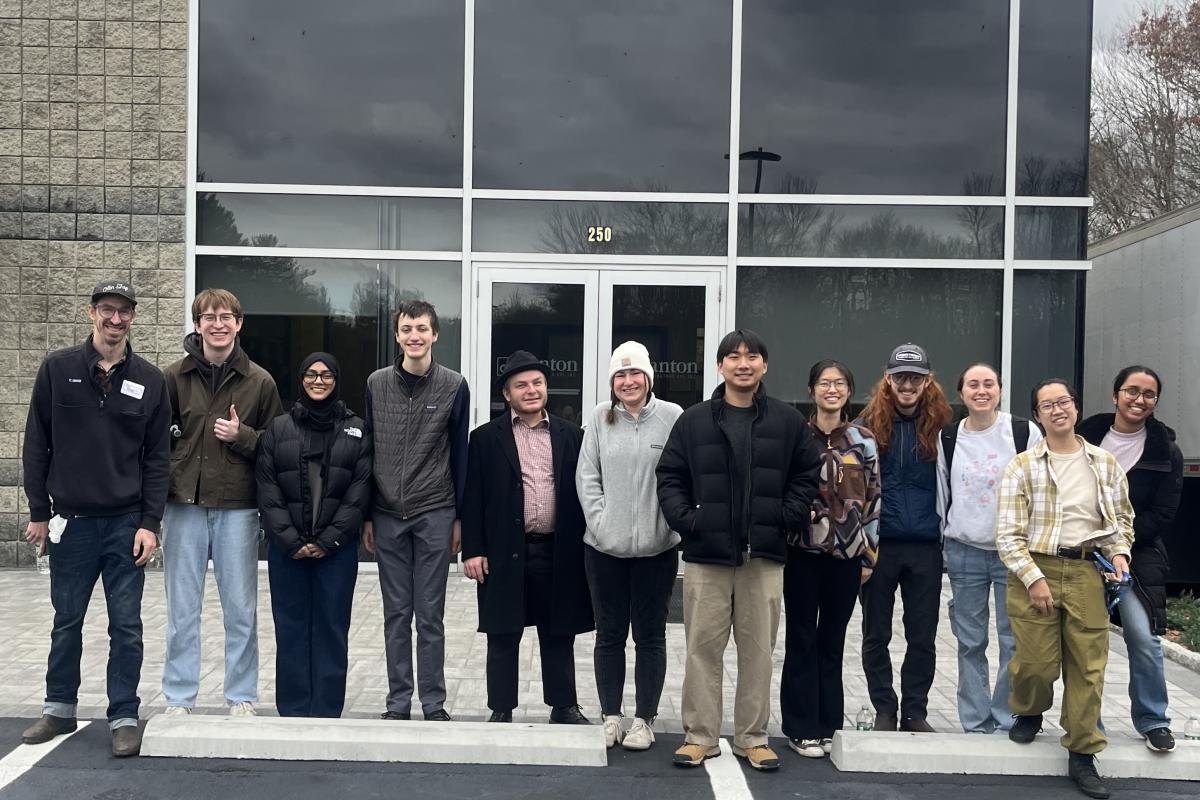
Coby Unger and students in the How It's Made IRL co-curricular stand in front of one of the production bakeries for Dunkin' Donuts.
For our next tour, we were lucky enough to visit one of the production bakeries for Dunkin’ Donuts. As a New England native, this was particularly exciting for me.
Similar to the Boston Globe, the Dunkin' bakery is an operation that simply can’t miss a production day, especially in Massachusetts, so production happens through the night. Every donut, as our tour guide, the VP of manufacturing, explained, is baked fresh within 24 hours of a customer eating it. The process starts with a dough mixer before moving on to a 100-foot-long proofing oven with a continuous conveyor system moving up and down and through the whole thing in 45 minutes before dropping the donuts into a boiling vat of oil for frying. The cooling, frosting and topping stations happen next before the donuts are loaded onto the wire racks that will bring them into each restaurant. We were lucky enough to see the first donuts of the day move through the whole production line. As an added treat, we also got to eat the first 12 donuts of the day.
United Tool was our next factory. Their business focuses on die-cut plastic parts and multi-stage stamping for complex bent metal components. One of the most unique aspects of the production at United is that they make the tooling in-house for their products, allowing for quicker turnaround and continual improvement. The facility has a full-service machine shop, including wire EDM machines and CNC mills to make their cutting and bending dies as well as production parts for clients. We were able to see workers operating giant hydraulic presses and stamping machines, and a huge warehouse wall full of die cutting tools for various gaskets, washers and other components.
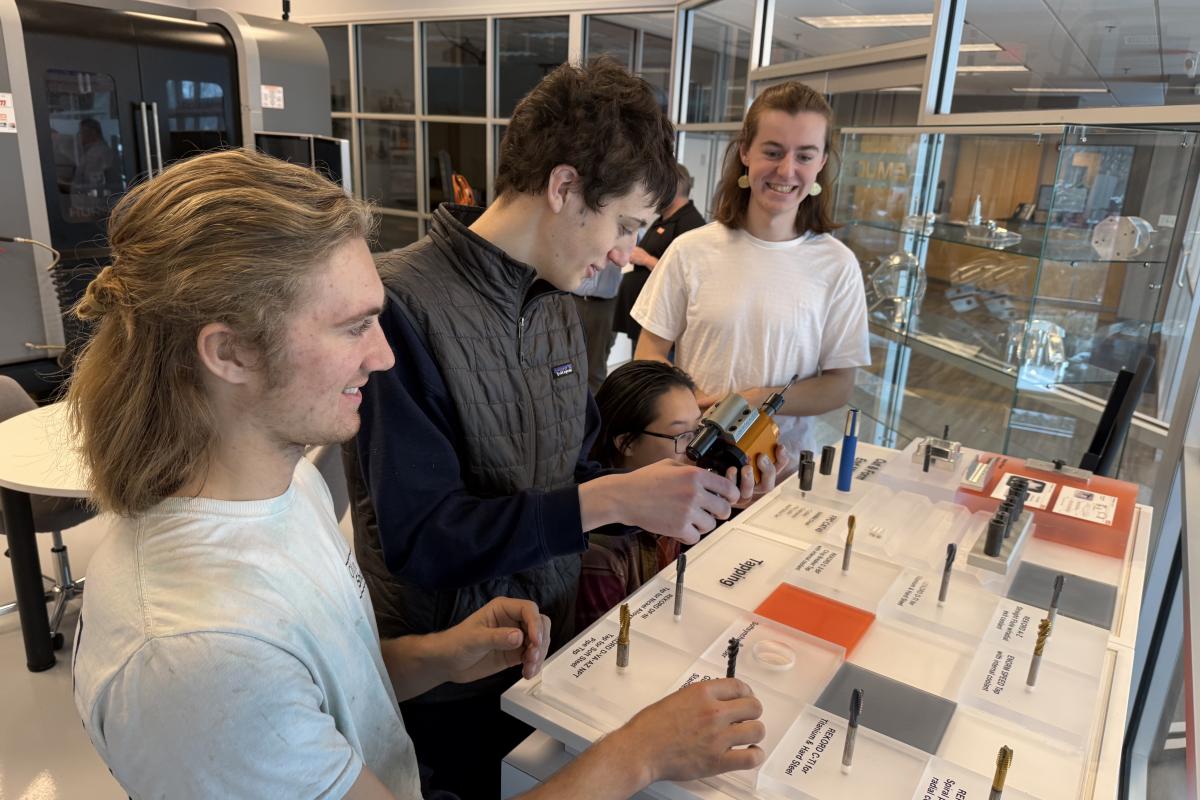
Oliners as they enjoy the final tour of the semester at Emuge Franken.
Our final tour of the semester was at Emuge Franken, a maker of custom high-quality carbide end mills.
While a standard 1/2 inch or 3/8 end mill is pretty ubiquitous in most machine shops, these tools are insufficient for making complex shapes like turbines, impellers and other complex geometries. This is where Emuge comes in. While most of their production is done in Germany, all of that tooling is metric, so the Massachusetts plant makes all the inch-based tooling for US applications. The company is committed to ethical sourcing of its raw materials, so the Cobalt for its tools is all sourced from Australian mines. This also ensures the highest quality. Precision 9axis grinding machines are programmed by in-house engineers to produce the unique contoured tools that Emuge’s high-end clients need. After the carbide is ground to shape, they enter an electron thin-film coating process where it is further strengthened.