Embracing Uncertainty: “Probabilistic Robotics” at Olin
At Olin, experimentation isn’t just something students do in the lab—it’s built into the curriculum itself.
A new course called “Probabilistic Robotics” exemplifies that philosophy, combining cutting-edge technical content with a student-centered design to prepare future engineers for meaningful, adaptable careers.
At its core, probabilistic robotics is about teaching machines to operate in an uncertain world.
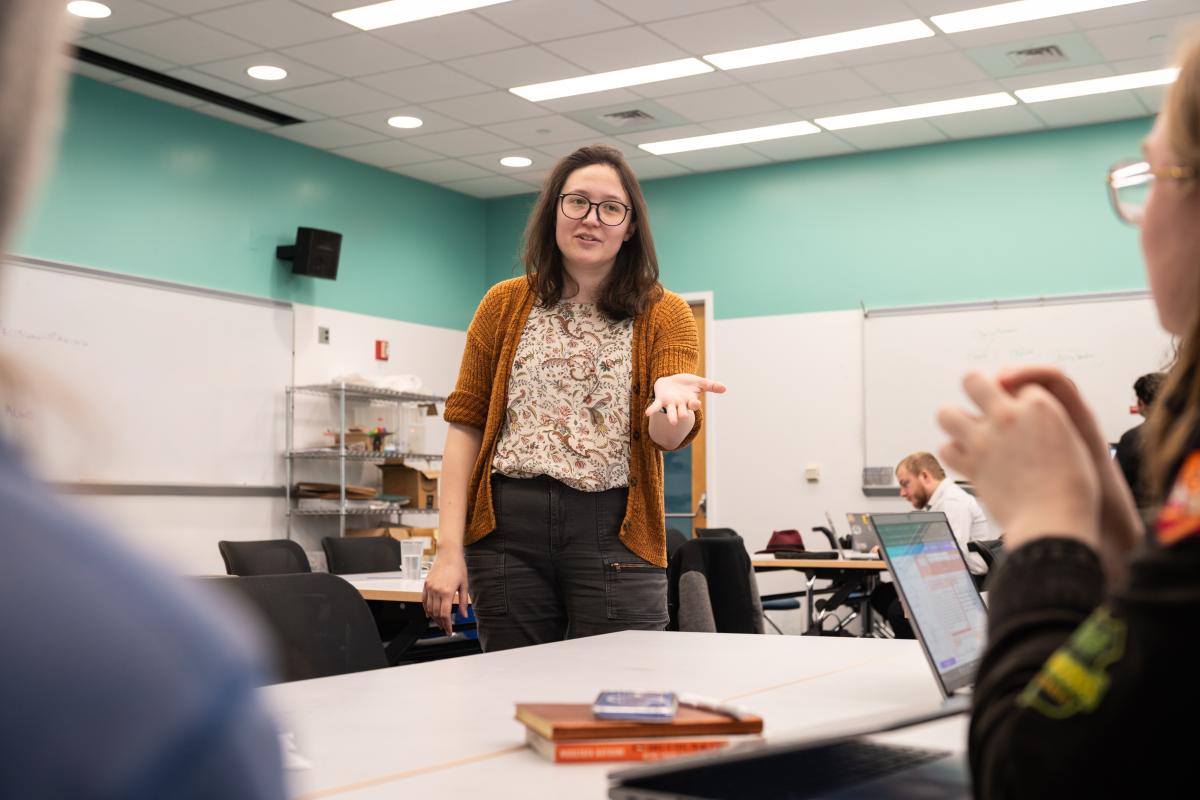
Professor Victoria Preston instructing her Probabilistic Robotics students
“Robots are embodied computers,” says Victoria Preston ’16, assistant professor of engineering, who teaches the course. “Because they exist physically, they must deal with the realities of the world in the same way humans do—with uncertainty. Humans never have perfect information about everything, and neither does a robot.”
For students, that means learning not just how to program robots, but how to reason through ambiguity, using probability to make informed decisions even when the data is incomplete or noisy.
In true Olin fashion, the course itself is an experiment—and one that students helped design. Preston co-developed “Probabilistic Robotics” together with Ivy Mahncke ’27, a junior who now serves as Course Assistant for the class. Mahncke first met Preston when she took “Computational Robotics,” an introductory course that invigorated Mahncke’s interest in robotics as both a passion and a career path.
“After Comp Robo, I knew that I really wanted to go deeper into the subject matter, but the only way to do that with the current course offerings was to kind of ‘hack’ other classes to make them relevant to robotics,” Mahncke says. “This course creates a more structured way for students to learn deeper connections that will help them use robotics in a range of engineering careers.”
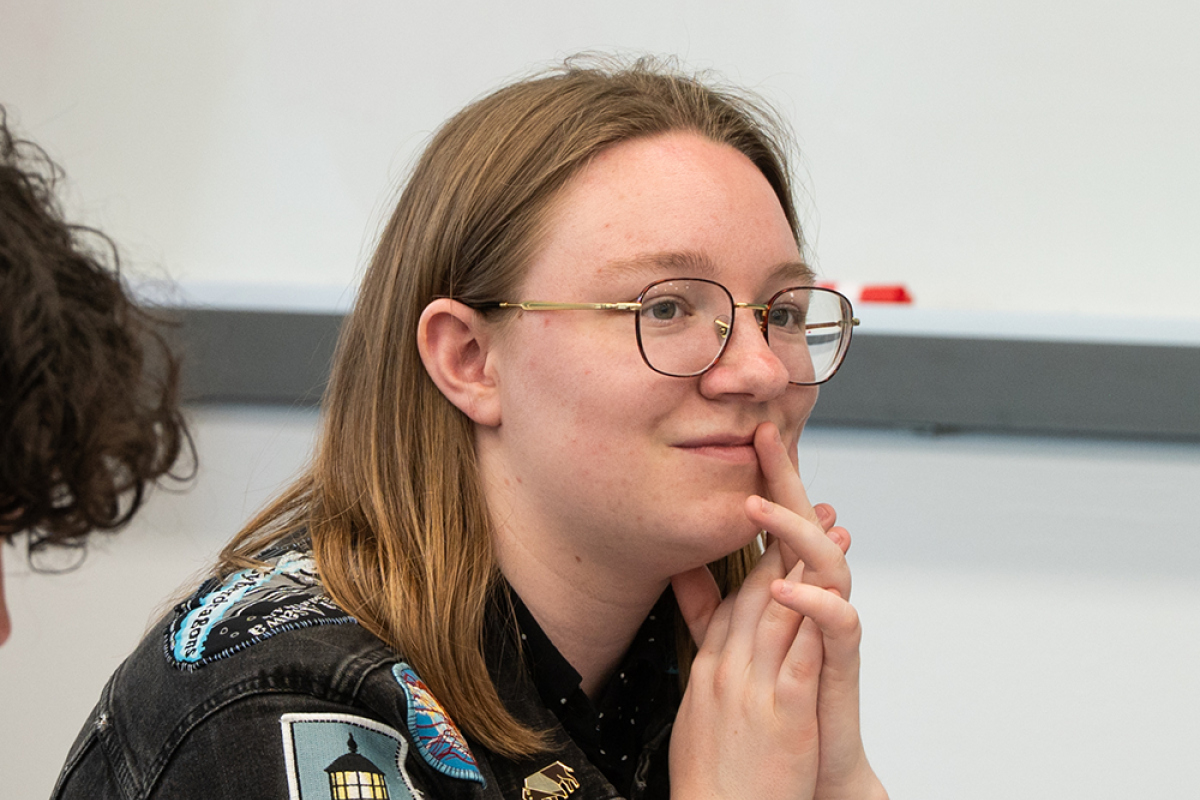
This course creates a more structured way for students to learn deeper connections that will help them use robotics in a range of engineering careers.
After Comp Robo, I knew that I really wanted to go deeper into the subject matter, but the only way to do that with the current course offerings [at that time] was to kind of ‘hack’ other classes to make them relevant to robotics."
Ivy Mahncke
Course Assistant, Probabilistic Robotics
Students in this pilot course are from a range of majors at Olin, including engineering robotics (E:ROBO), electrical and computer engineering, and mechanical engineering.
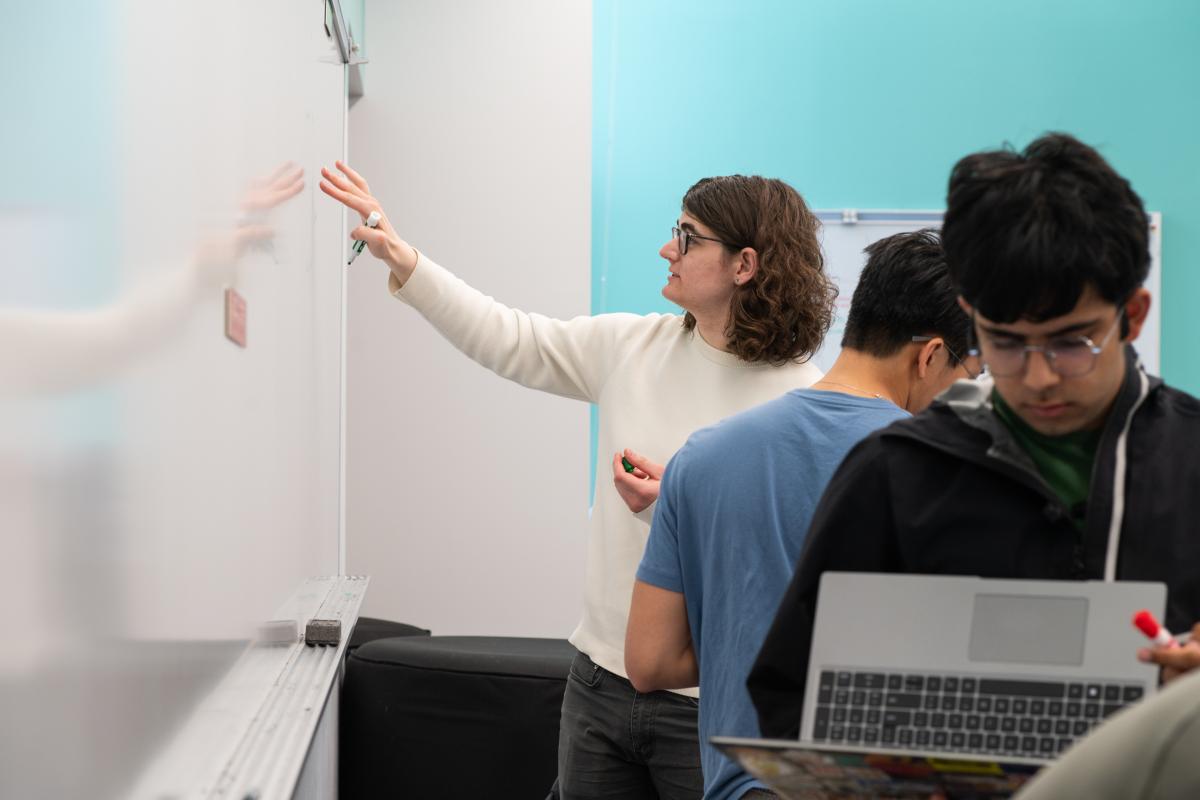
Students ideating a concept in Probabilistic Robotics
A Course Designed for the Real World
To inform their syllabus, Preston and Mahncke spoke with alumni, analyzed job descriptions, and incorporated feedback from peers who had encountered probabilistic robotics concepts in internships and interviews. That level of student/faculty collaboration reflects a broader institutional culture at Olin.
“The relationship between students and faculty here is very collaborative,” Mahncke adds. “There’s a mutual belief that everyone is invested in learning, which opens up so many possibilities.”
“Probabilistic Robotics” blends lectures with conceptual discussions and hands-on projects, such as building a simulator from scratch. This kind of virtual environment in which a robot navigates a 2D world using imperfect sensor data is a cornerstone of robotics testing.
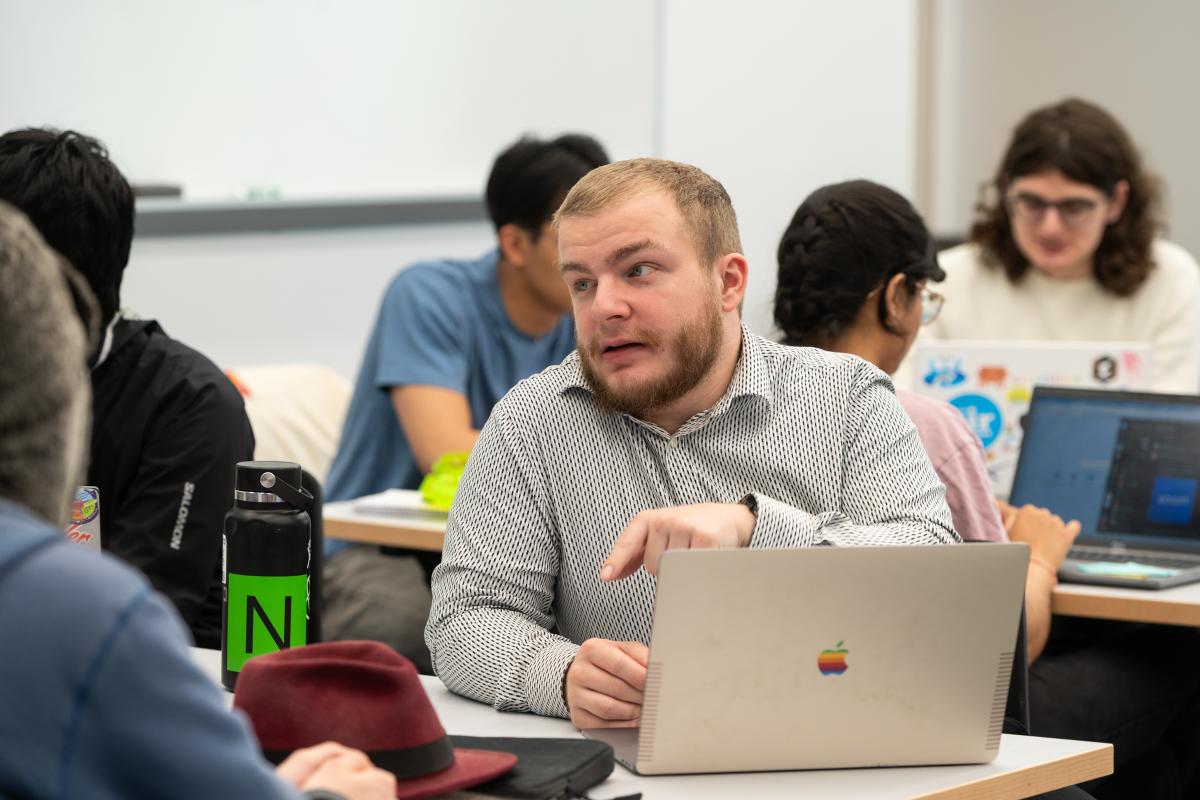
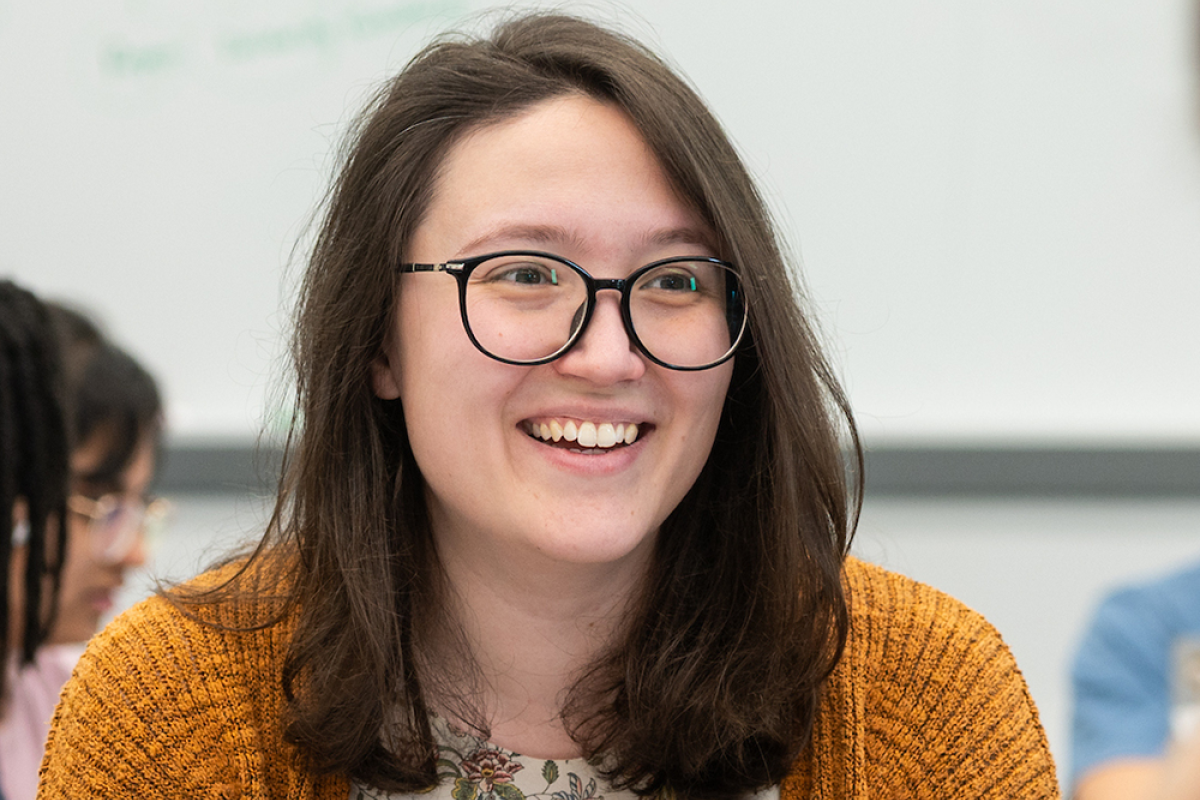
Olin Students engaging in conceptual discussions in Probabilistic Robotics
“That simulator becomes a shared foundation,” says Mahncke. “Students can implement different algorithms in it and see how everything connects. It’s something they can also show to employers or keep building on after the class. In fact, the reason I got my internship at Wing, a delivery drone company, was because the technical interviews focused on exactly what we’re teaching in this class.”
A defining feature of the course is its emphasis on autonomy. In two major “deep dive” projects, students choose topics, design their own learning objectives, and present their findings—first to classmates, then to a broader public audience. The projects are wide-ranging, from exploring new algorithms not covered in class to applying probabilistic methods to personal robotics projects.
“The second half of class is like a graduate seminar in that students have full creativity in what they want to pursue,” says Preston. “The structure mirrors real engineering work, where problems are rarely predefined and solutions often require both technical knowledge and creative exploration.”
The second half of class is like a graduate seminar in that students have full creativity in what they want to pursue.
The structure mirrors real engineering work, where problems are rarely predefined and solutions often require both technical knowledge and creative exploration.”
Victoria Preston '16
Assistant Professor of Engineering
Some of the course content covered also includes advanced algorithms typically reserved for graduate study, offering many students a head start as they prepare for the future—including Swasti Jain ’26, a senior in the class who begins a master’s program in robotics at Northwestern University this fall.
“Olin does a great job of giving you hands-on experience, but also helping you understand the concepts and vocabulary that are necessary to interact with different fields,” says Jain. “When I spoke to some alumni from Northwestern, they said they didn’t cover a lot of the topics we’re learning until much later, so having this foundation now makes me feel like I have a real advantage going into this degree.”
“Olin does a great job of giving you hands-on experience" says Swasti Jain ’26
Ultimately, “Probabilistic Robotics” reflects Olin’s broader mission to prepare engineers who are not only technically skilled, but also adaptable, reflective, and purposeful. By embracing uncertainty, students learn to navigate complexity with confidence.