STORY: Inside the Olin Makerspace Institute: Sharing the "Olin Way" with Global Educators
This summer, the Olin Shop team crossed an exciting new milestone: hosting 25 educators from around the world for their very first Olin Makerspace Institute.
This article is in collaboration with Coby Unger, Senior Shop Manager and Instructor of Fabrication, and Daniela Faas, Associate Professor of the Practice and Director of Fabrication and Laboratory Operations.
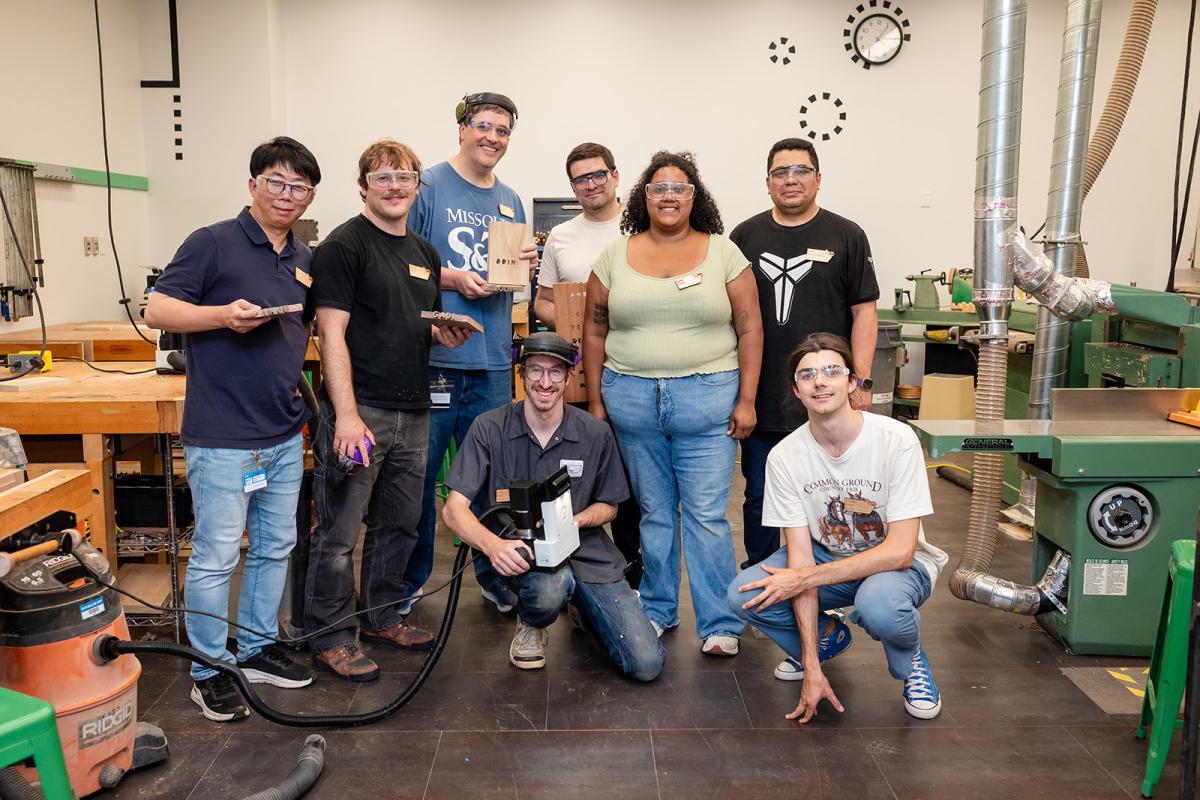
Coby Unger and an Olin student pose with Makerspace Institute participants in one of Olin's Shop spaces.
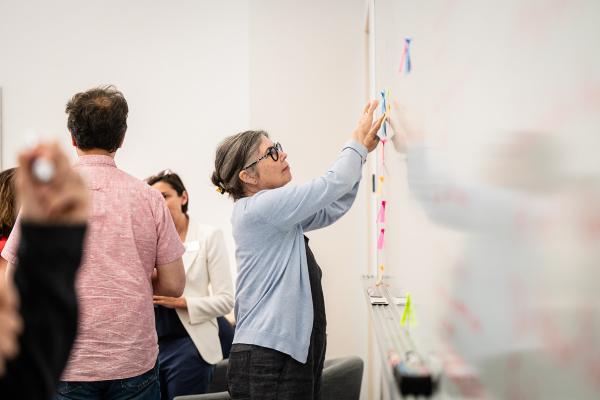
Here at Olin, we take immense pride in our fabrication spaces and how deeply they are woven into our project-based curriculum. We did not want the Makerspace Institute to just be a series of standard presentations. We wanted to provide an experience that was quintessentially Olin—showing not only the systems we’ve built, but how our team, our machines and our students collaborate within the broader community. Because hands-on learning is core to who we are, we made it the heartbeat of the Institute. That, plus a healthy dose of teamwork and, of course, plenty of sticky-note ideation sessions.
We were thrilled to host participants from eight different institutions representing five countries for this immersive, three-day program. Here is a look at how we brought the Olin experience to life.
Setting the Vision: Mission-Driven Design
Early on the first day, participants were prompted to identify, write, or re-examine the mission statement and vision for their own institutions' makerspaces. This exercise allowed each group of educators to anchor their ideation in a cohesive goal, keeping specific users and outcomes at the forefront. Olin students and alumni will recognize this immediately—it’s the exact kind of user-centric framework taught right out of the gate in classes like Collaborative Design.
Day One Traditions: Introductory Shop Training
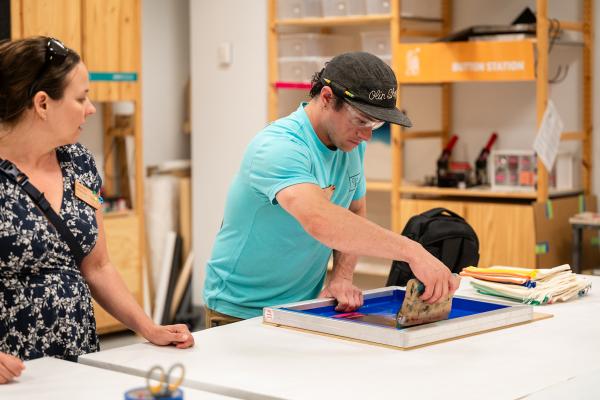
Another unique Olin experience built into the program was Introductory Shop Training. Just as every single Olin student is required to complete Intro Training as part of Design Nature, our participants stepped up to the machines on day one.
For our students and our visiting educators alike, this training serves two main purposes:
- The Fundamentals: Teaching the proper, safe use of our core machines—the band saw, drill press, and belt sander.
- The Culture: Providing a critical window to talk about shop safety, community expectations, and culture.
People always enter the shop with a vast spectrum of prior experience. Introductory training gives us the perfect opportunity to establish consistent, inclusive messaging from day one.
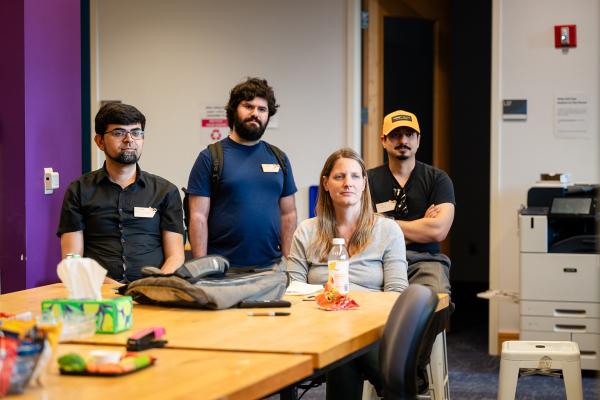
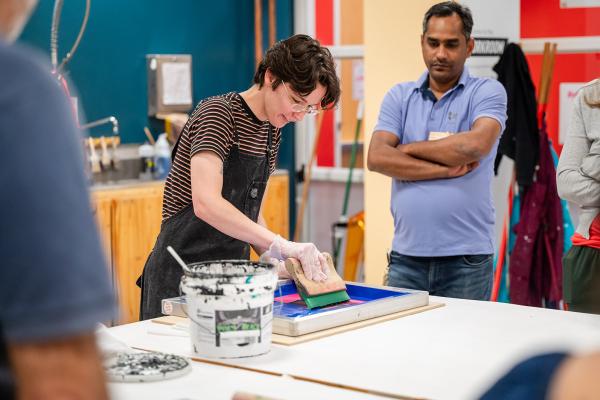
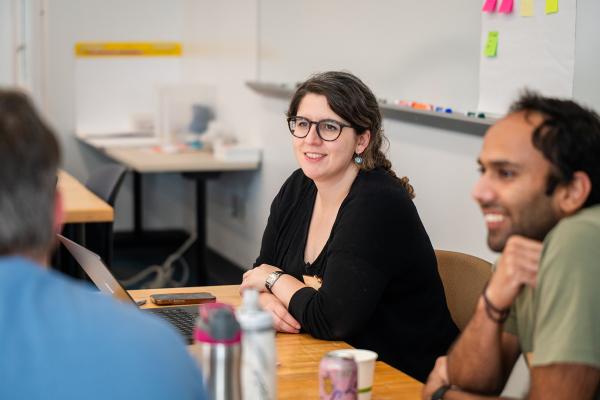
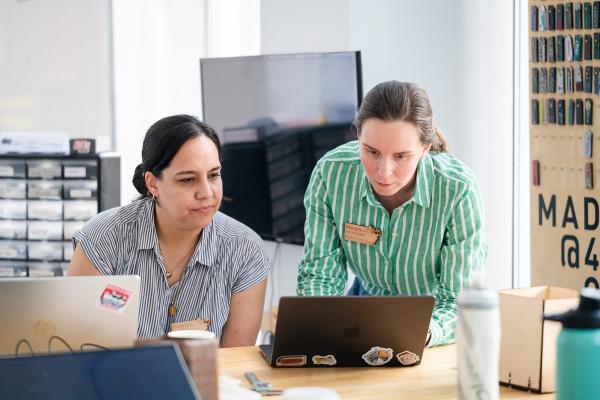
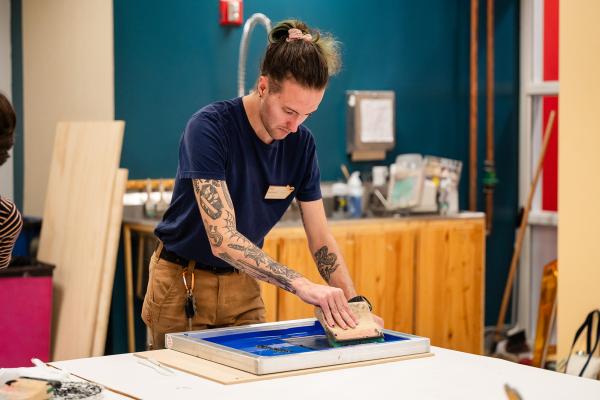
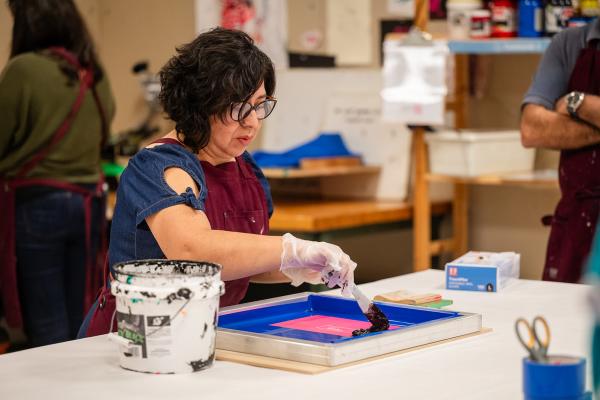
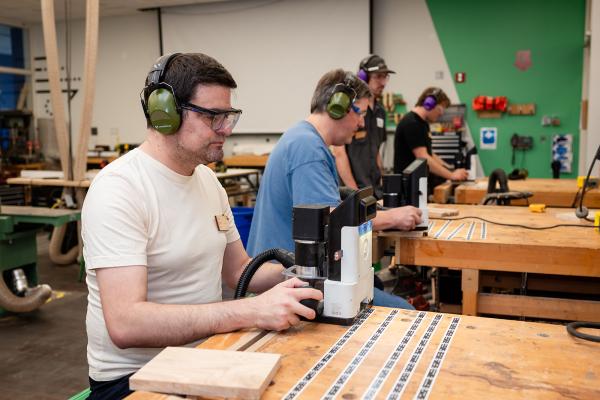
Photos from Makerspace Institute
Deep Dives and Student Leadership
Perhaps the most exciting aspect of the program was offering a menu of 9 distinct "Deep Dive" experiences across afternoons on days two and three. Participants customized their schedules, choosing from topics ranging from glass fusing and CNC wood joinery to Design for Manufacturing (DFM) and Mechanical Prototyping.
Each deep dive offered a direct window into how the Olin Shop integrates into our academic curriculum. Some sessions had an obvious curricular link—like Mechanical Prototyping—while others were designed as skills-based primers, like CNC wood joinery. No matter the topic, participants got their hands dirty and left with a tangible, unique object they made themselves.
Even better, those who chose the Intro Electronics deep dive got the added bonus of learning directly from our student shop assistants.
Spotlighting Our Student Team
As always, our student team was a major highlight of the program. We spoke at length with attendees about our hiring process, emphasizing how we look for candidates who are mentors first and expert machinists second. Our summer fellows fielded excellent questions about student worker responsibility, sharing insights into their individual experiences and how roles adapt across different creative spaces on campus.
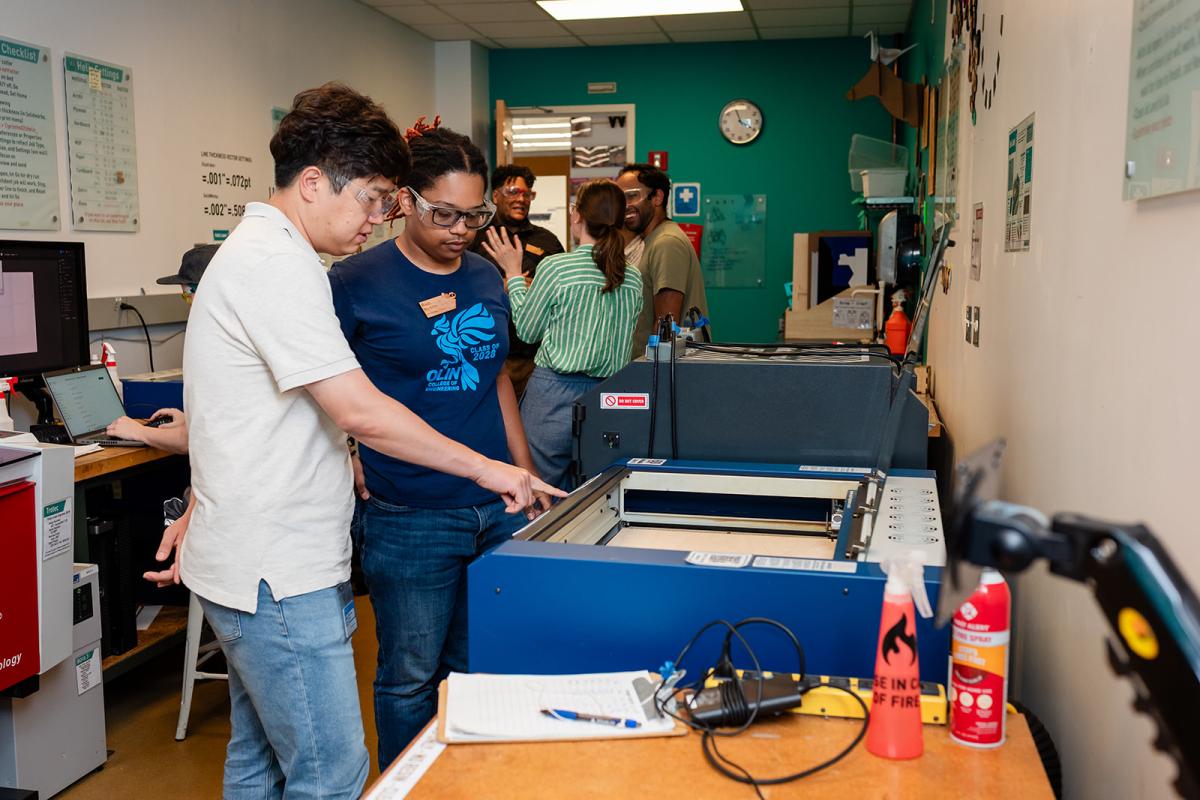
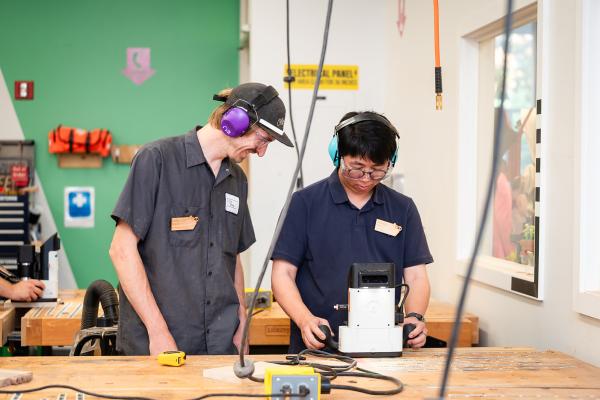
An Olin student helps a Makerspace Institute participant with one of The Shop's machines.
Insights from Faculty, Students, and Leadership
To ground these shop experiences in the broader ecosystem, we hosted a dedicated Faculty and Student Panel. This session gave participants a 360-degree view of how the physical shop supports the academic mission. Faculty members shared how they design coursework to leverage the space, while students spoke honestly about the learning curves, the autonomy they are given, and how the shop culture builds their confidence as engineers.
We were also honored to have key perspectives from Olin’s leadership team:
- President R. May Lee shared insights from her global perspective, including her experience launching institutions in Shanghai and elsewhere. She emphasized the critical importance of identifying a project’s specific audience and mission early in the design process.
- Provost Shayla Sawyer Armand delivered a particularly impactful message, sharing that she had actually been a participant in the Olin Summer Studio during her time at RPI. Her very first Olin experience led to major developments in her subsequent work at RPI—including their re-accreditation process and the launch of multiple labs shaped largely by Olin's influence (her words, not ours!)
Looking Ahead: Closing Thoughts
As we wrapped up Olin's first Makerspace Institute, the energy in the room was palpable. The feedback from our inaugural cohort reminded us just how vital these collaborative, hands-on environments are for the future of education. Participants walked away not just with custom-made projects and a stack of sticky notes, but with concrete strategies to cultivate safety, inclusivity, and vibrant maker cultures at their home institutions.