STORY: “Biomedical Device Design” Course Teaches Little-Known Industry Skillset
At Olin College, a new take on a “Biomedical Device Design” course shifts focus from next-gen prosthetics or cutting-edge implants in favor of teaching students something just as critical: how to prove that a device is safe, effective, and thoughtfully engineered long before it reaches a patient.
The spring, “Biomedical Device Design” was offered to students across majors, reflecting Olin’s hands-on, project-based approach to engineering education while preparing students for the realities of highly regulated industries.
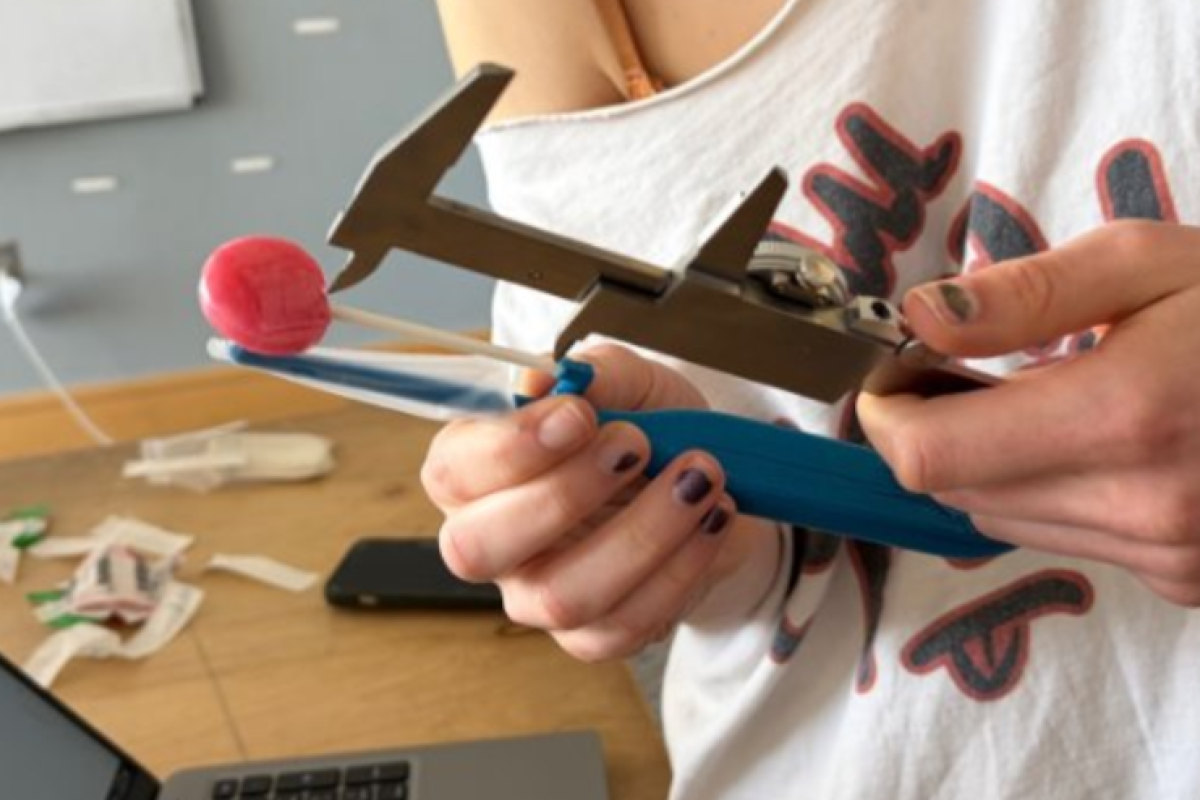
A student in Olin's Biomedical Device Design course is pictured using a caliper to measure a prototype medical device.
“Many courses in Olin’s curriculum are already focused on teaching students how to do design,” says course instructor Jesse Austin-Breneman, associate professor of mechanical engineering. “What I wanted to focus on here was traceability and documentation, and teaching students how you document the design process in a way that supports quality management and accountability.”
That focus comes directly from industry. Before creating the syllabus and learning objectives for the course, Austin-Breneman interviewed professionals working in medical device companies and asked what they wished new engineers understood before entering the field. The answer, overwhelmingly, was documentation and verification.
“In the medical device industry, companies must demonstrate to regulators like the FDA that their products meet rigorous safety and quality standards,” says Austin-Breneman. “The FDA doesn’t tell you exactly how to do it, so that means engineers need to create clear processes, document decisions, and design tests that verify a product performs as intended.

Jesse Austin-Breneman, the instructor for Olin's Biomedical Device Design course and a professor of mechanical engineering, is pictured instructing his students.
To help students practice that mindset, “Biomedical Device Design” centered around an intentionally simple challenge: designing a thermometer. Rather than pushing students to create the flashiest possible prototype, Austin-Breneman deliberately narrowed the project scope so students could focus on the systems engineering process behind the design.
“I intentionally gave them a problem that is easy for an Olin student,” says Austin-Breneman. “The difficult part was what came next: demonstrating with evidence why design decisions were made and how those decisions connected back to user needs.”
Students began by researching user needs, developing market requirements documents, and translating them into engineering specifications. From there, they created detailed design documentation and conducted verification experiments to test whether specific requirements had been met.
Teams focused on a range of different projects, such as developing a thermometer for divers that required testing waterproof seals under pressure and evaluating electromagnetic interference.
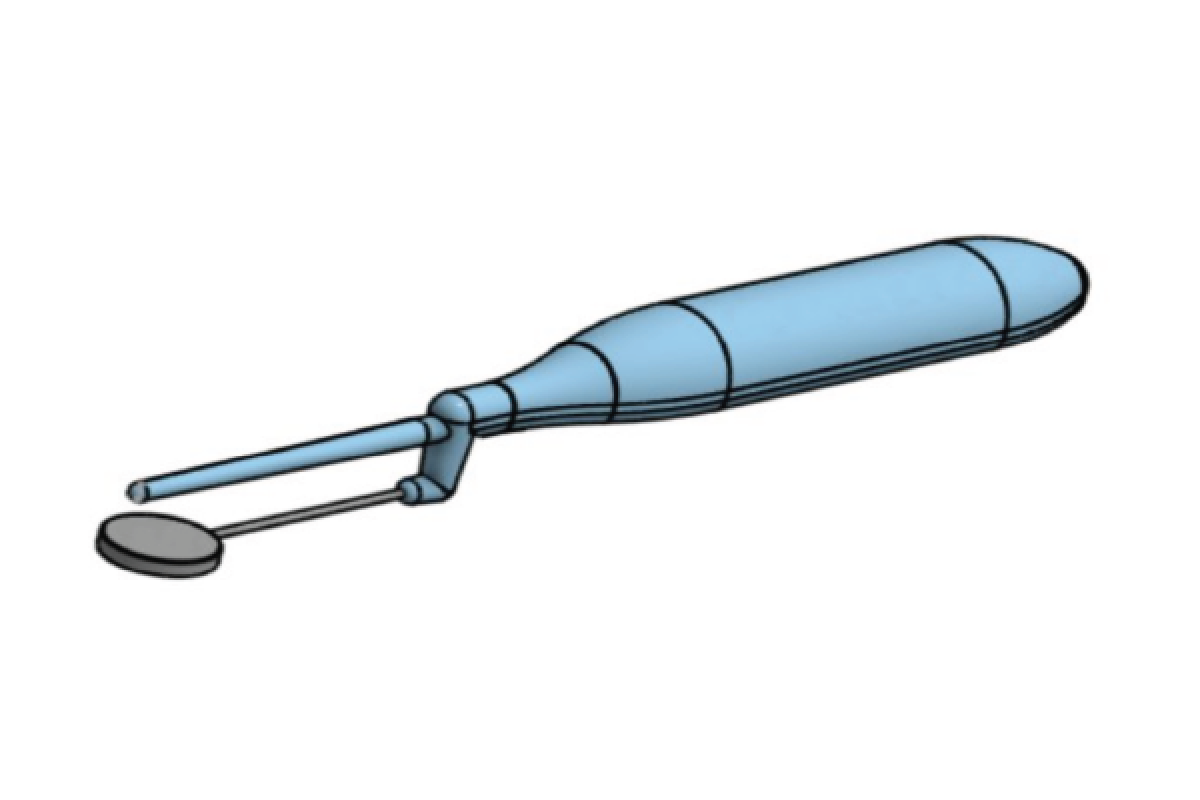
An image of a 3D model of a medical device created using computer-aided design (CAD) software for Olin's Biomedical Device Design course.
“Biomedical Device Design” attracted students from across majors, highlighting the interdisciplinary nature of biomedical design work. For mechanical engineering major Timur Gray ’28, the class connected directly to his long-term career interests in biomedical devices and prosthetics.
"I was always interested in biomedical devices, and earlier this year I started my own medical device research project with prosthetics,” says Gray. “I thought the class would give me better insight into what the actual documentation process and road to certification would look like.”
His team designed a pediatric thermometer with a lollipop attachment to help children comfortably keep the thermometer in place under their tongue. For his part, Gray focused on material selection and verification testing, evaluating factors like durability, cost, and resistance to disinfectants.
“I was always interested in biomedical devices, and earlier this year I started my own medical device research project with prosthetics,” says Gray. “I thought ["Biomedical Device Design"] would give me better insight into what the actual documentation process and road to certification would look like.”
“I think this class definitely helped prepare me for that career path,” says Gray. “It gave me a good idea of the proper steps to approach actually bringing something to users.”
For this course, Austin-Breneman also experimented with a competency-based grading system in which students repeatedly revised work until they demonstrated mastery of specific skills. Rather than grading final documents, he assessed students on their ability to improve through feedback and iteration—a process that mirrors real-world engineering practice.
The result was a course grounded not only in technical knowledge, but in reflection, responsibility, and continuous improvement. In an engineering landscape increasingly shaped by complexity and accountability, “Biomedical Device Design” offers Olin students the chance to practice a different side of innovation