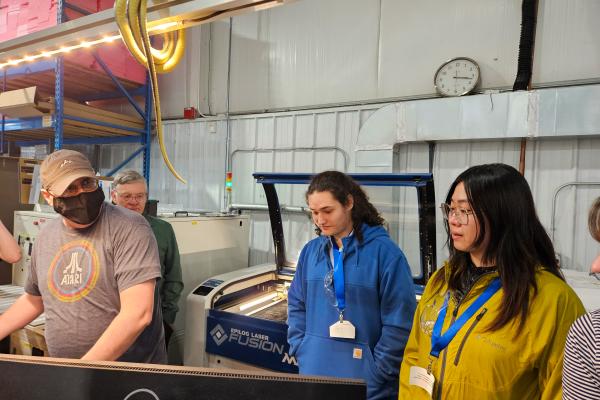
Over spring break 2026, Coby Unger, Senior Shop Manager and Instructor of Fabrication, Jordan Spring ’20, Fabrication Specialist and Instructor, and the "How It's Made IRL" co-curricular students teamed up with Lauren Palmer ’09, Associate Director of Partnership Development, and SCOPE to offer a more immersive experience over Spring Break.
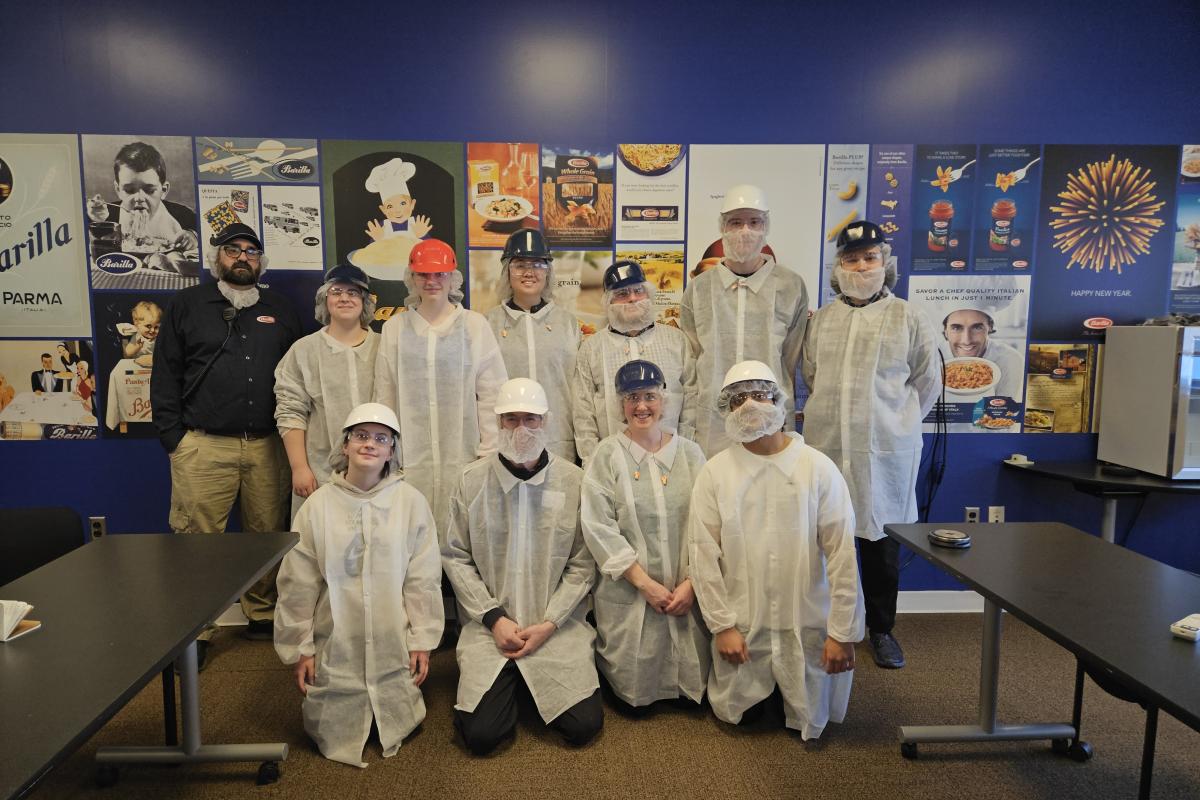
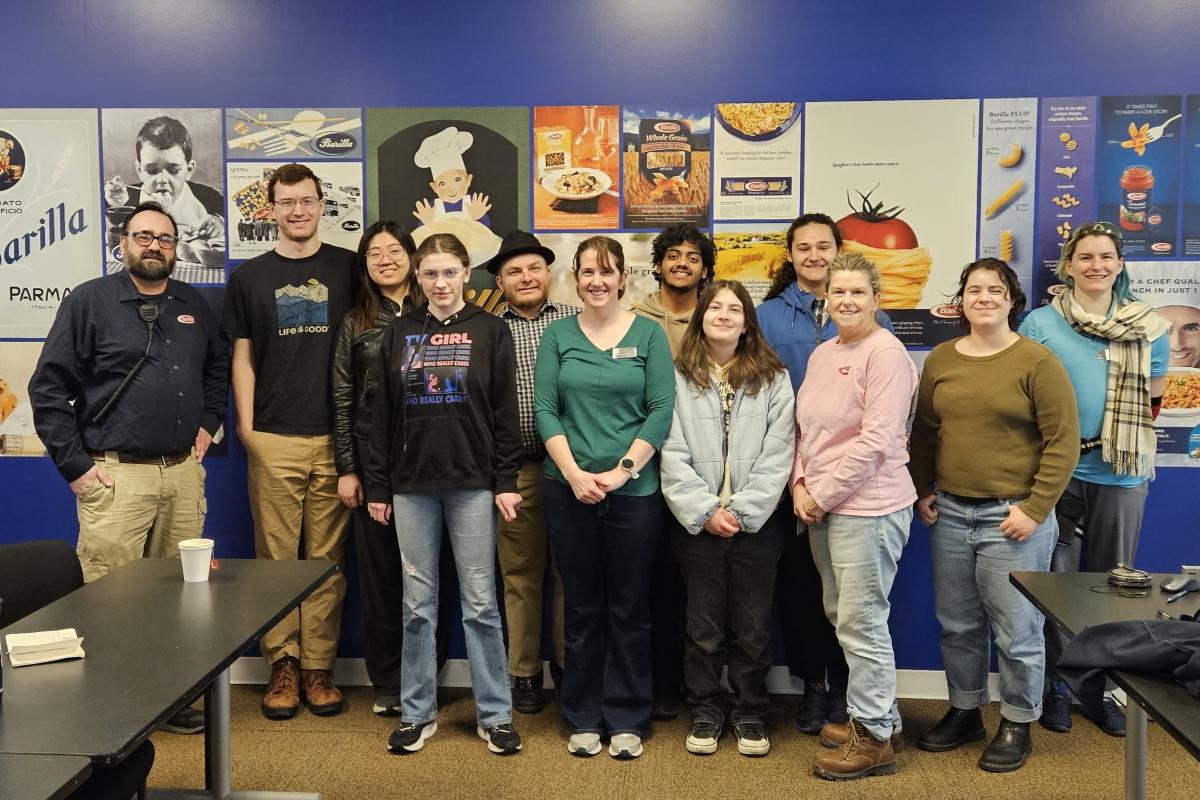
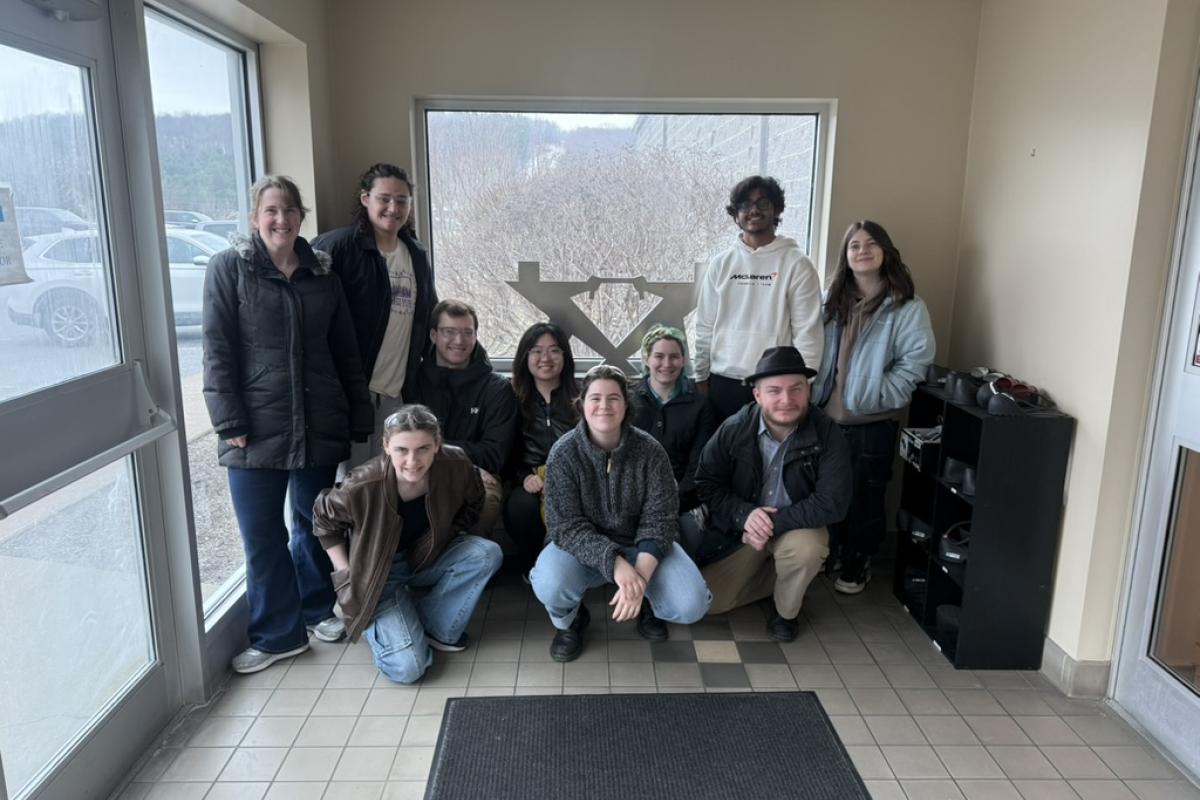
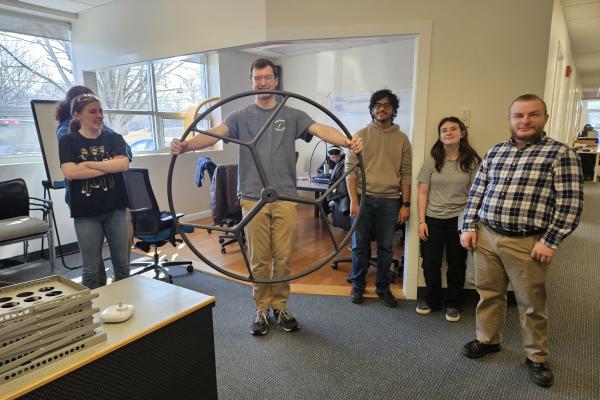
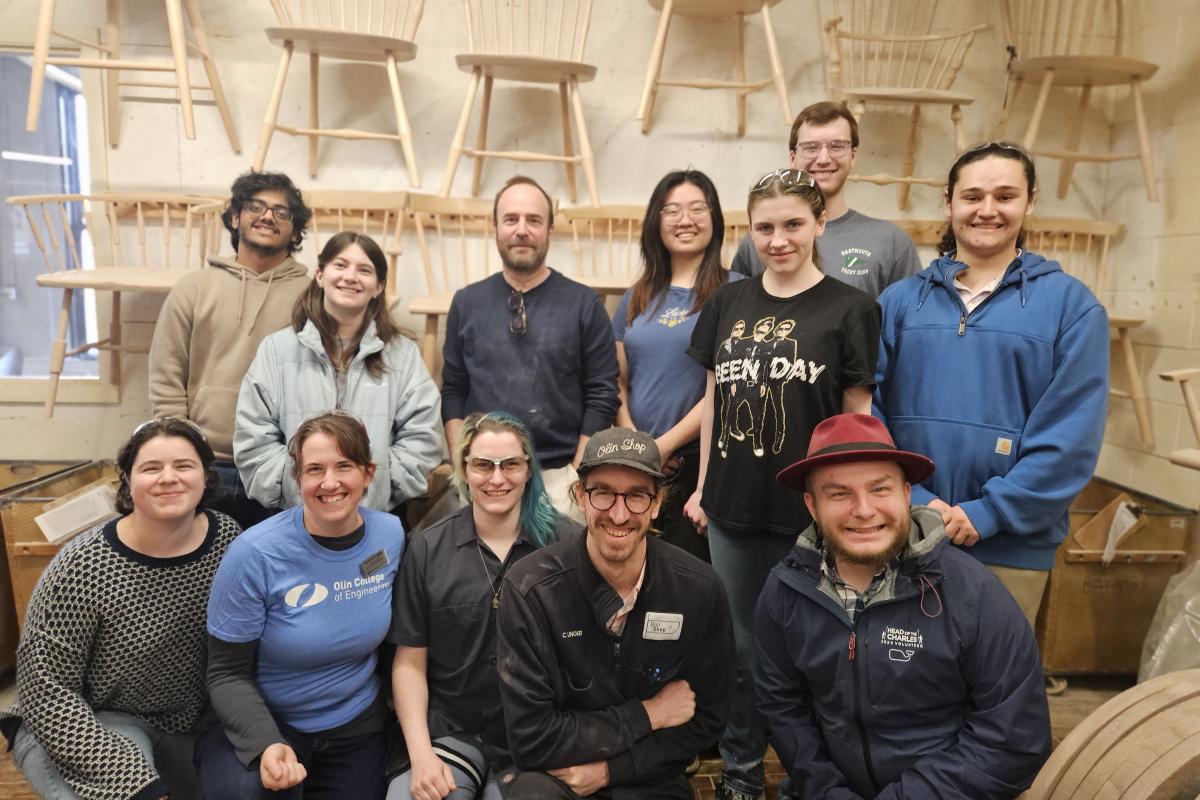
Coby Unger's "How It's Made IRL" co-curricular students and staff pose in one of the offices at the Barilla facility.
Last semester, Unger introduced the co-curricular for students to learn how things are made in manufacturing settings. Over spring break, the group of eight students, Unger, Palmer, and Spring toured nine different manufacturing facilities in New York and Rhode Island, including:
- Armstrong Mold Corporation (East Syracuse, NY)
- Atalys (Rochester, NY)
- Barilla (Avon, NY)
- Darco Manufacturing (Syracuse, NY)
- Instron (Norwood, MA)
- Kodak (Rochester, NY)
- Moore Bros (Bristol, RI)
- O&G Studio (Warren, RI)
- Z-AXIS & Bear Power Supplies (Phelps, NY)

It was such a pleasure to join these students on such a fantastic trip – an opportunity I wish I had in college.
The students delighted everyone we met with their curiosity and insightful questions. This showed the real value of an Olin education and impressed our tour guides."
Lauren Palmer ’09
Associate Director of Partnership Development
Read more about Lauren
What a journey! I was inspired, the students were inspired, our tour guides were inspired.
I am proud to be showing the manufacturing world to our Oliners, and to be showing off our Oliners to the world."
Jordan Spring ’20
Fabrication Specialist and Instructor
Reflections from the Students
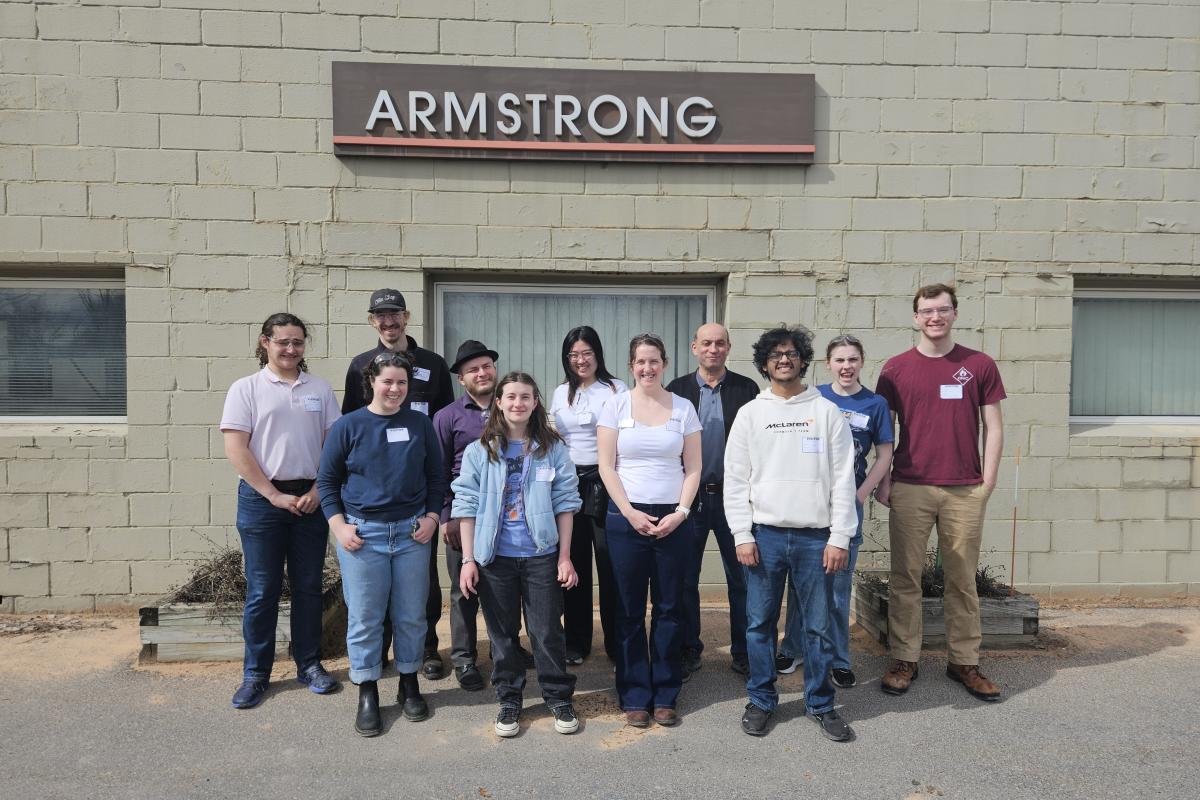
Ava Possidente ’26
“This trip provided an opportunity to experience what it was like to work in the manufacturing space. It helped inform what I look for in a company and solidified what I want to do next.”
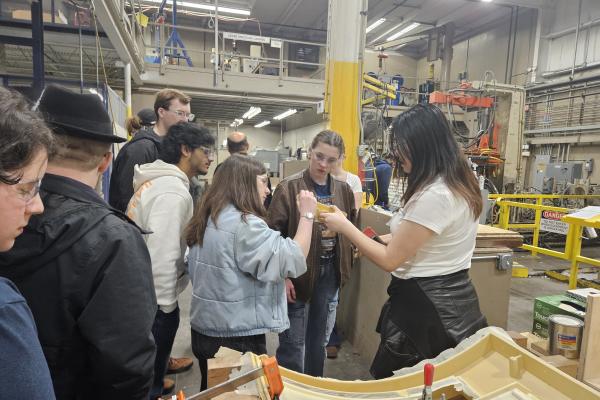
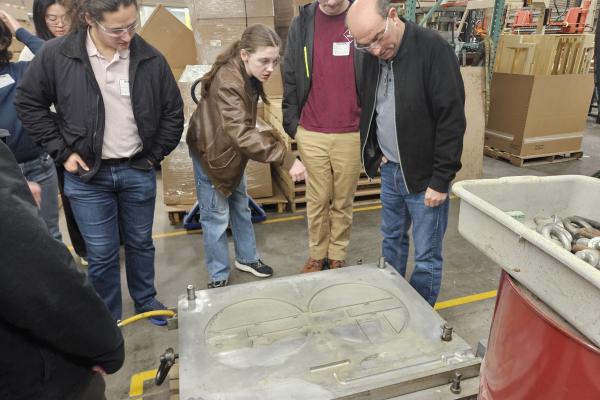
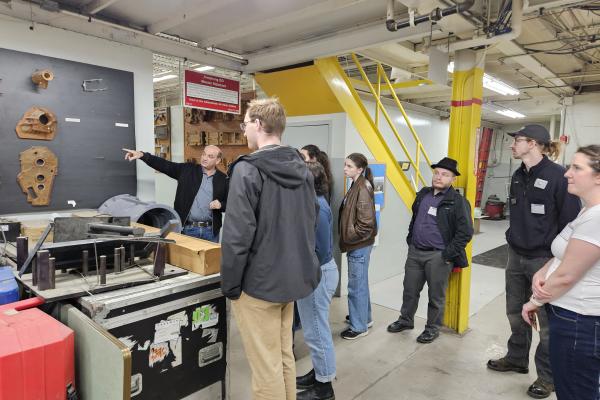
Our first stop on the spring break factory tour was Armstrong Mold Corporation. Armstrong Mold specializes in custom RIM (reaction injection molded) plastic parts and sand-cast aluminum parts and has existed for over 55 years. The interior decoration is a homage to their history with hand-made wooden positives used in early mold-making hung on walls. Each piece has a story.
Their current facilities, though, make wooden positives obsolete through a host of machines and processes such as plaster molds, sand casting, die casting, assembly, and quality testing. Our group was lucky enough to witness the entire sand-casting process from mixing the sand with a binding agent to pouring a mixture of molten aluminum and magnesium into sand molds to recycling the materials and testing parts. I was particularly intrigued by the fluorescent penetrant inspection, a process where parts are submerged in fluorescent dye that binds to imperfections, making them easy to spot visually.
Additionally, Armstrong Mold provides product development support to its vendors, meaning their work resides at the intersection of design for manufacturing and mold making. This experience provided an opportunity to see what it was like to work in the manufacturing space. It helped inform what I look for in a company and solidified what I want to do next.
More Photos from Armstrong Mold Corporation
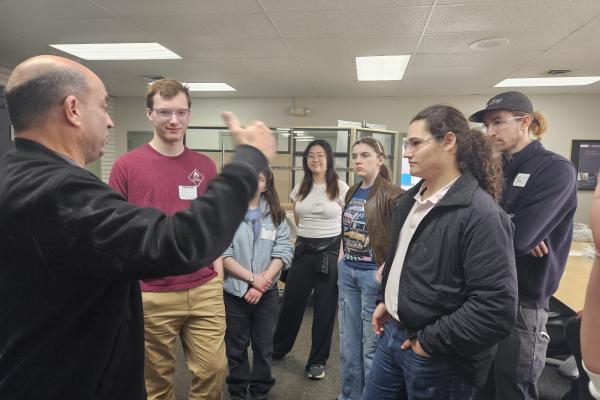
Angela Huang ’26
"In learning about the everyday careers of different machinists and engineers we met on this tour, I have learned more about where I want my own career to lead, what I want to work on, and how I can maximize my impact as a mechanical design engineer."
Our visit to Atalys in Rochester, NY, was a wonderful experience encompassing the everyday design and manufacturing challenges of injection molding. Atalys precision molds plastic parts for the biomedical industry. One of their most tiny and impactful parts is the surgical staples used by large biomedical corporations.
"If this part is a millimeter off in its critical dimensions, it will kill someone," we learned from a Quality Control engineer in a room where they use a Coordinate Measuring Machine (CMM) and other inspection devices to measure parts from each shift. Warpage, flash, and discoloration are tracked with intent and precision to keep these life-saving parts within their tight tolerances.
In another room across the factory, mechanical engineers work on fixing any wear or tear on the massive steel molds. Down the road, design engineers work on designing new molds for incoming projects. Atalys tends to accept more complex projects: tiny geometries, numerous cavities, thin walls, and long length over diameter. Their well-kept injection molding machines do all the physical actions and initial inspection, but it is the first-principles-based mold designs that make these complex parts possible with reasonable cycle times.
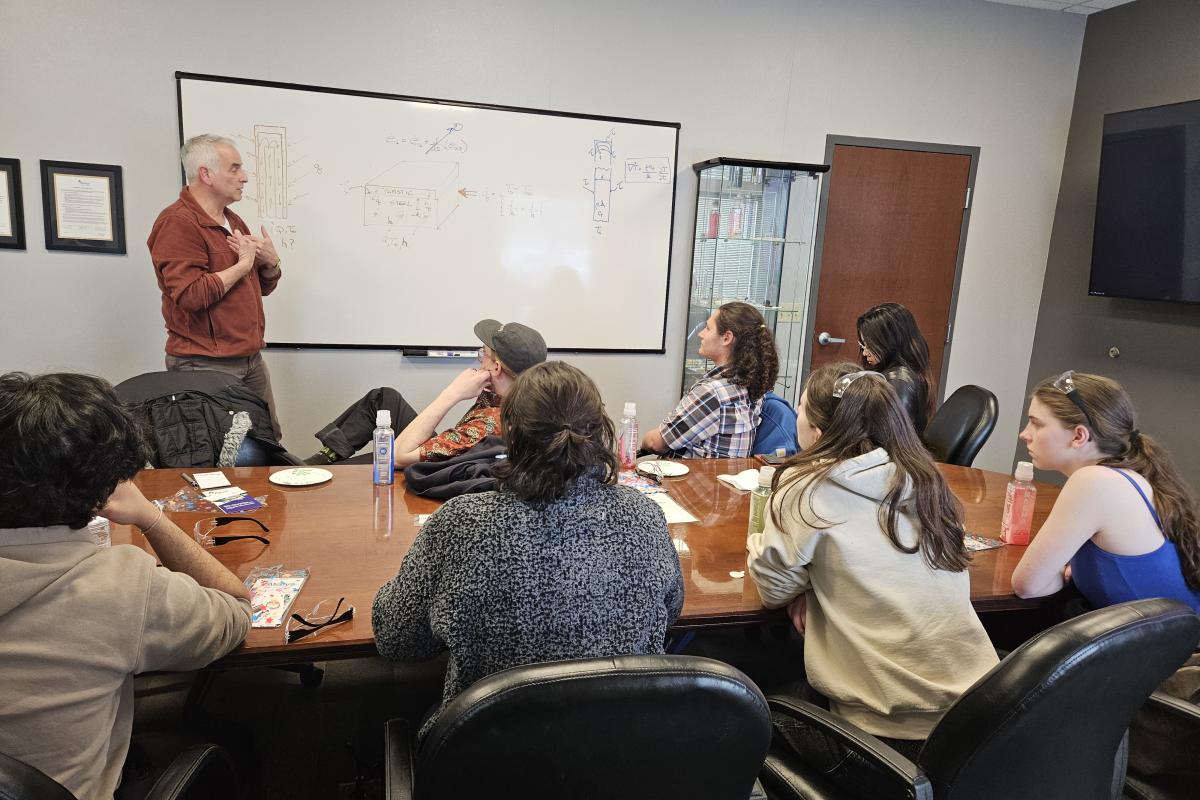
Maria from Atalys gave us some vitamin energy drinks with injection-molded caps that pushed through to unseal and drop vitamin powder. Dr. Crispino from their R&D explained a whiteboard example of a cannula cooling challenge with diagrams showing how he used the First Law of Thermodynamics and the Heat Conduction Equation to prove technical feasibility and estimate achievable cycle time.
Seeing these physical and theoretical examples of how fundamental mechanical design areas like heat transfer and fluid dynamics apply very directly to injection mold design engineering was eye-opening for me in terms of potential career opportunities. This manufacturing facility tour road trip overall has really helped me expand my practical knowledge of manufacturing processes and the context around them. I've learned so much about safety, technical feasibility, inspection procedures, and process optimization.
Additionally, in learning about the everyday careers of different machinists and engineers we met on this tour, I have learned more about where I want my own career to lead, what I want to work on, and how I can maximize my impact as a mechanical design engineer. I wouldn't cut a single stop on this tour or any of the extra hours we spent just chatting with different professionals in their respective manufacturing fields. It was all super fun, super informative, and made me feel like a more cohesive and grounded mechanical engineer.
Tamás Regan ’28
"My eyes were opened to both the awesome and messy realities of manufacturing, and how to better design to avoid some of that messiness in the future!"
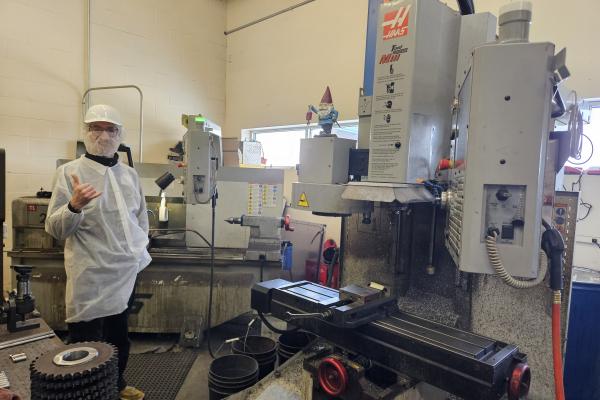
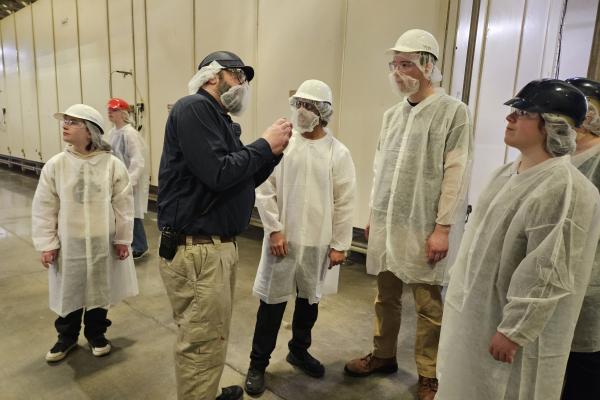
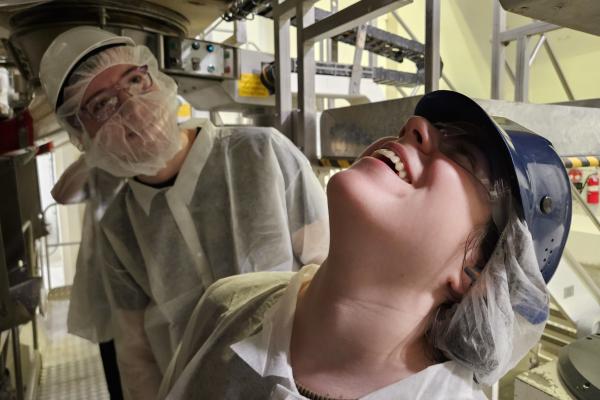
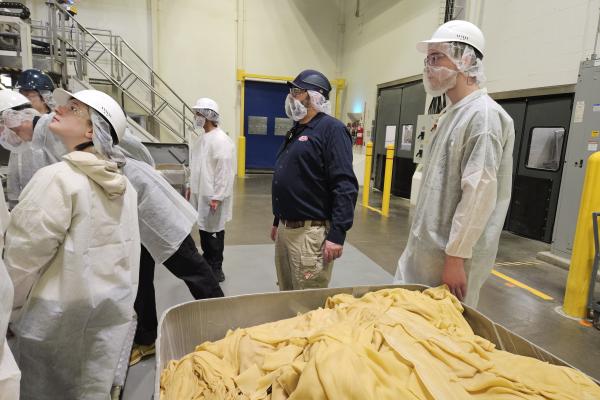
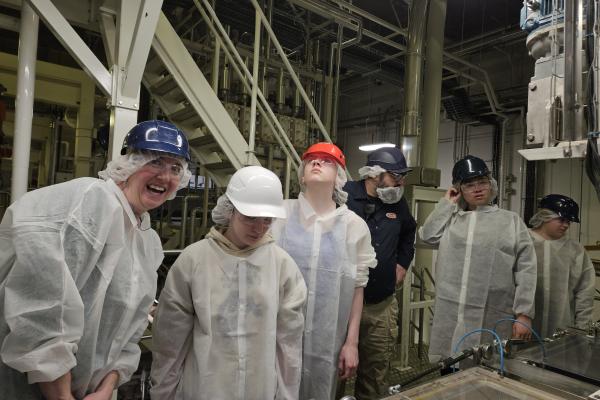
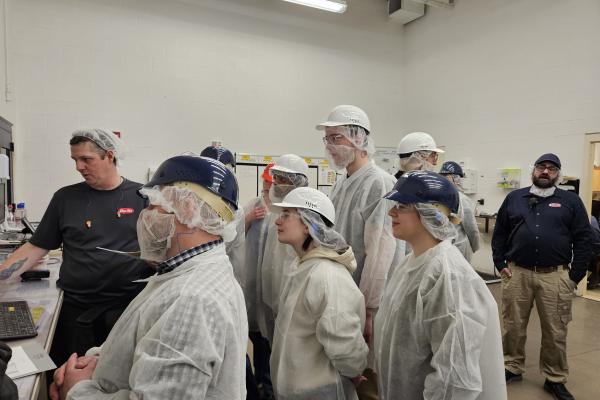
There is a saying that society is always nine missed meals away from anarchy. In my journey to see how it's made IRL, I saw just a small piece of what is necessary to keep us from that future. The Barilla plant in Avon, New York, has a nominal output of 18 tons, or around 40,000 pounds of pasta per hour! Their annual output last year was 107,000 tons. We were privy to the entire production process, from the dies (molds, up to you what word to use), the short pasta dough is stamped in, and the machine that cuts the linguine, to the conveyor belts that expand, fill, close, and weigh the final boxes that you and I buy at the store every day. At the end of the tour, we learned that the pasta we witnessed being packed would be on store shelves in a week or less!
More Photos from Barilla
Vaughn Rhinehart ’26
“This trip has been an excellent continuation of my factory tour obsession at Olin, which has been a defining part of my senior year and helped me see where I might go next in industrial automation or manufacturing. During the trip, we saw a wide variety of approaches and technologies, we had the opportunity to speak with engineers, managers, and operators, and we were brought into the details of processes that would never be showcased publicly. These opportunities have broadened my context in engineering in a very unique way that few people get to experience.”
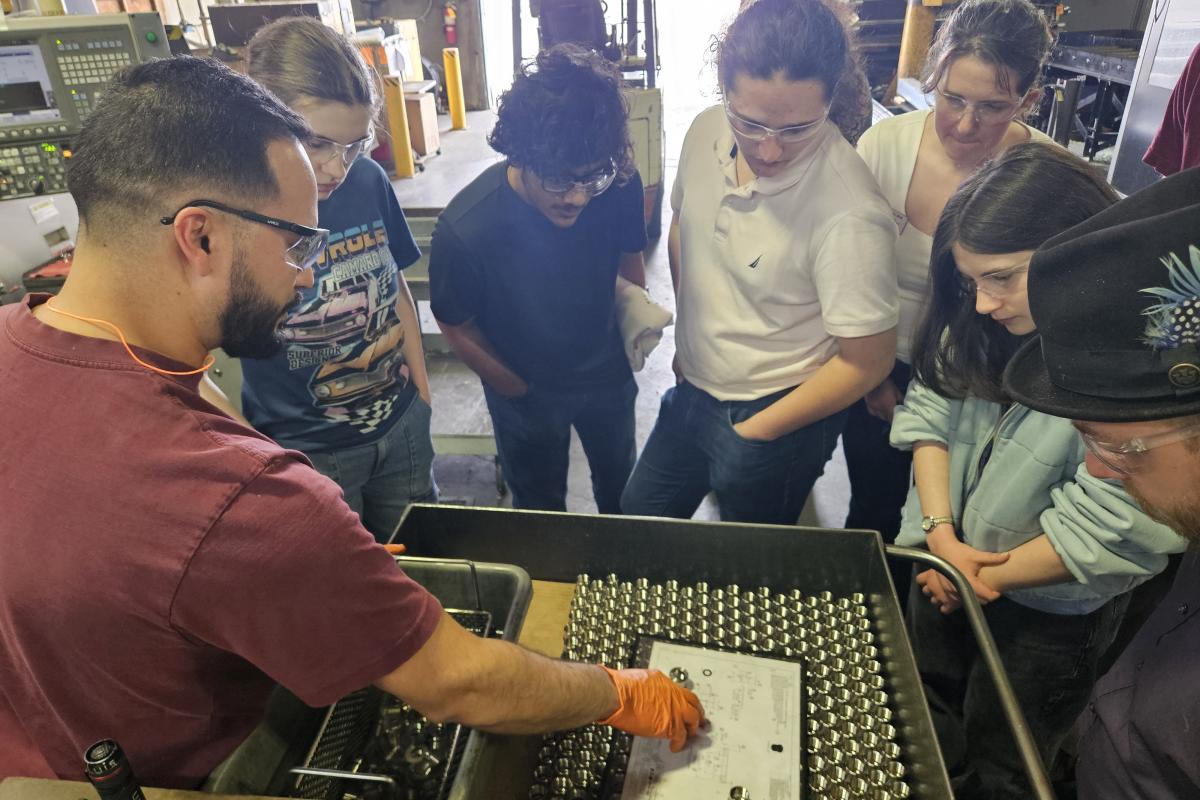
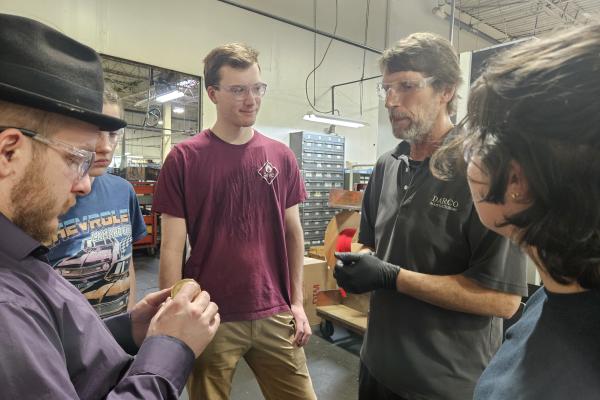
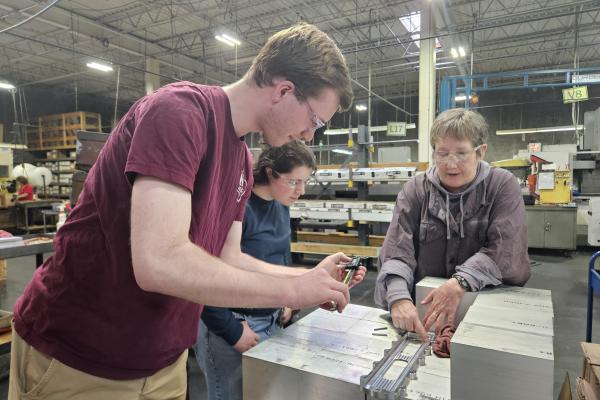
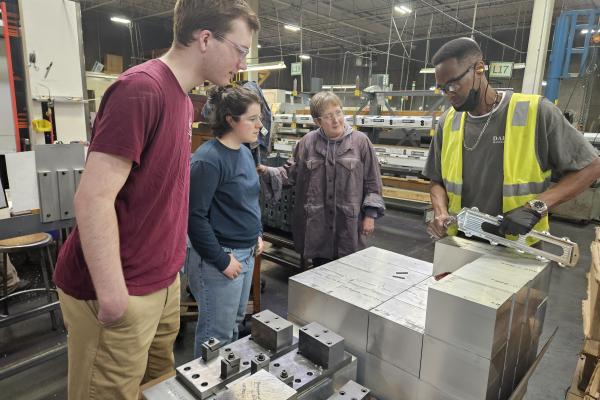
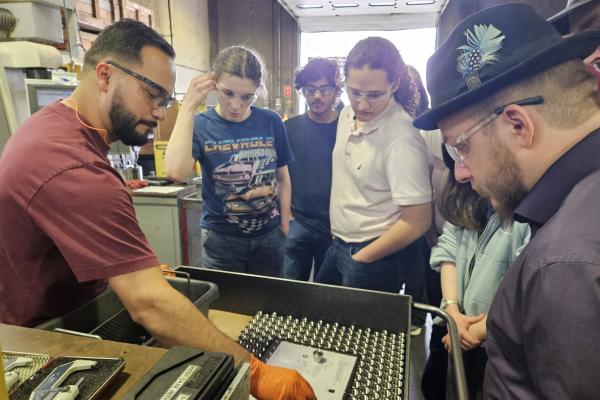
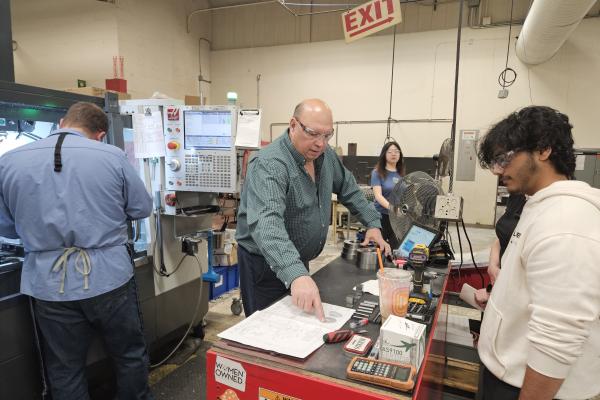
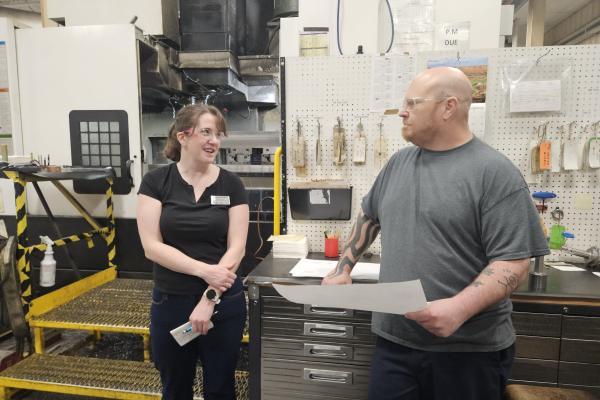
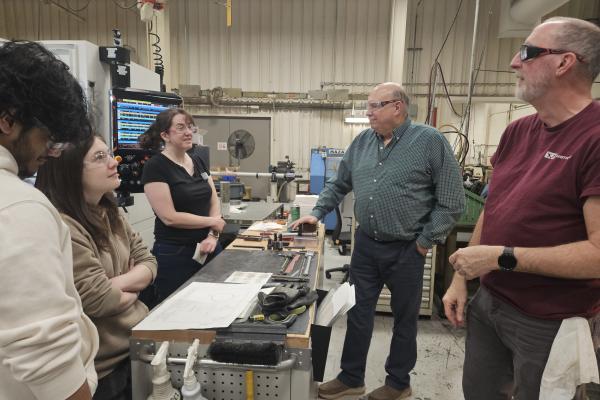
Our second visit was to Darco Manufacturing, a delightful machine shop in Syracuse, NY. We were greeted by Laura, the General Manager, who recounted to us her decades of experience in the industry while embodying the manufacturing auntie we all wish we had. Darco prides itself on its strength in both milling and turning, as well as its practice of programming every job by hand, writing the G-code instructions for the machines rather than using computer-aided manufacturing (CAM) software, which has taken over most of the industry.
On the shop floor, Laura set us loose to roam and talk with the operators and observe the machines. This freedom to explore was unprecedented for us, and we took the opportunity to learn about the operators’ careers and absorb their wisdom. Many of the parts Darco makes are relatively simple, but they clearly take pride in their work, optimizing their processes within the constraints of their equipment and achieving one of the lowest scrap rates we’ve seen. It showed us what it looks like to run a real machine shop and gave us context for what we would later see at Instron.
More Photos from Darco Manufacturing
Dhvan Shah ’28
“Overall, this trip has impacted my originally close-minded idea that robotics had to be a very specific field dealing with either only robot arms or warehouse robots. I have learned more about more specialized robots that are really cool and actually make sense to use at scale.”
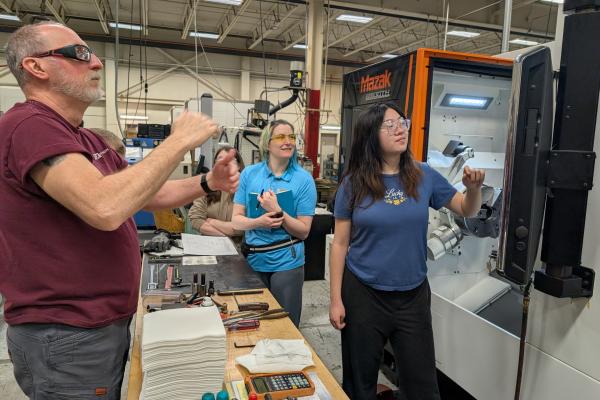
Instron makes machines that test material properties, and Olin actually has several Instron machines on campus. Specifically, we visited their manufacturing plant, which makes most of the parts for all the Instron machines, and then ships them out to Norwood to their assembly and testing plant. We saw some giant CNC mills and lathes that the components get machined on, and we also learned about some LEAN manufacturing processes that the Instron plant manager applies. I think these principles are super applicable to the Olin community. An example that really stuck with me was the focus of the plant manager on eliminating anything that isn’t value-added. When he took over the plant, Intron was still buying bigger raw stock and spending a lot of time cutting and facing it down. The process they apply now is to spend the extra money and buy pre-sized, pre-faced stock that they can directly put in their machines.
More Photos from Instron
Jillian Golde ’28
“Seeing these diverse factories has highlighted how many different paths there are in engineering. At each stop, we spoke with everyone from operators to plant managers. While not all were engineers by degree, their years of experience gave them immense technical expertise, proving there are many ways to master a field.”
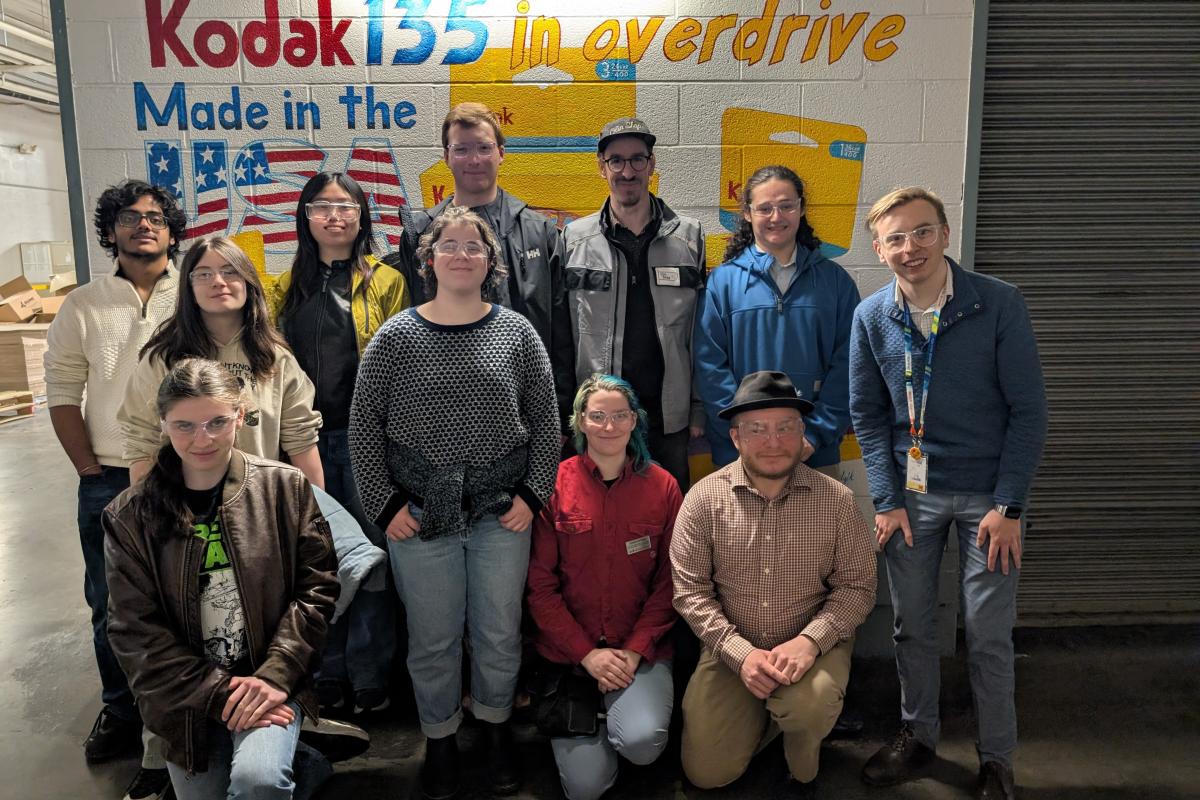
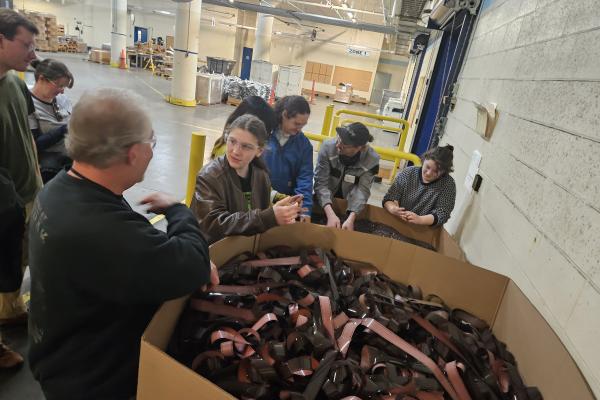
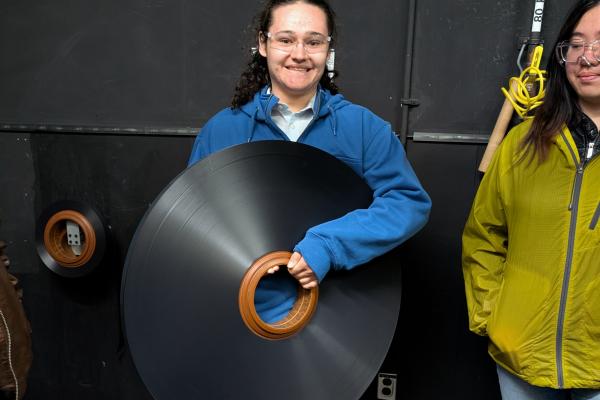
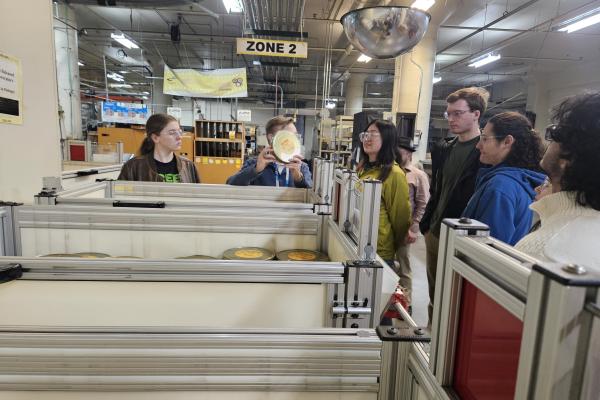
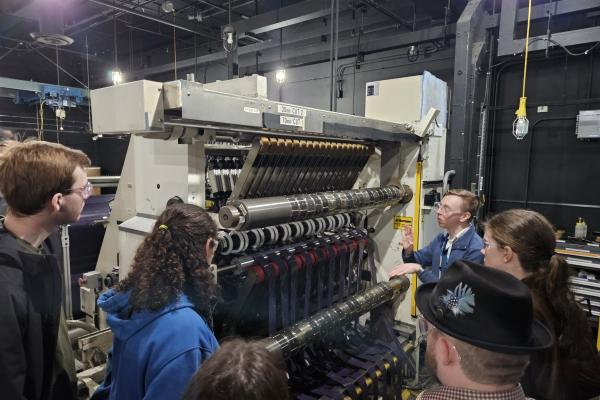
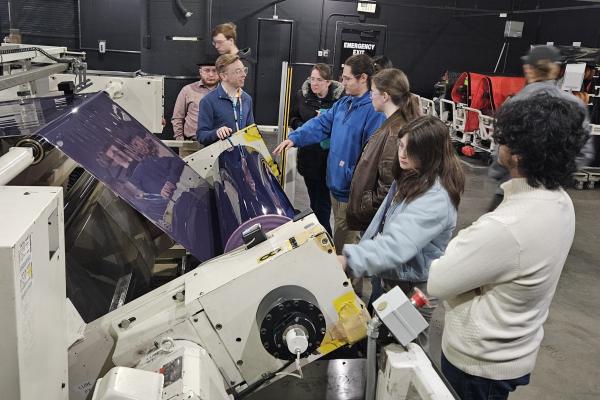
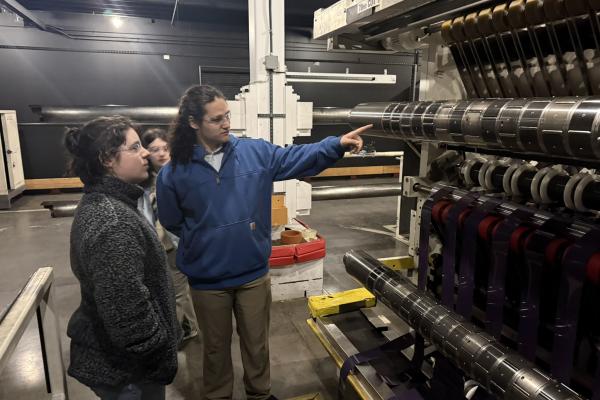
We visited Kodak, the company that first made photography accessible to the masses. During a tour of their Film Finishing plant, we saw the specialized machinery used to slit large film rolls into thinner sections and another machine that then pulled the film through a series of rollers and a perforator to create the sprocket holes, all while maintaining positive tension.
Because the film is extremely photosensitive throughout the process, the machines are run in complete darkness. Operators navigate using very dim greenish LEDs. Interestingly, I learned that any form of energy transfer, not just visible light, can activate the film.
Designing for these constraints is a unique engineering challenge. Machines cannot use standard indicator LEDs or screens, so instead, they rely on audio cues. Also, even something like rusting can activate the film, so they primarily use stainless steel in their machinery.
More Photos from Kodak
Ben Ely ’28
“Touring so many factories has shown me a wide variety of useful manufacturing methods for all different stages in the design/manufacturing process. I can’t wait to use my better understanding of each method to improve my designs and their manufacturability.”
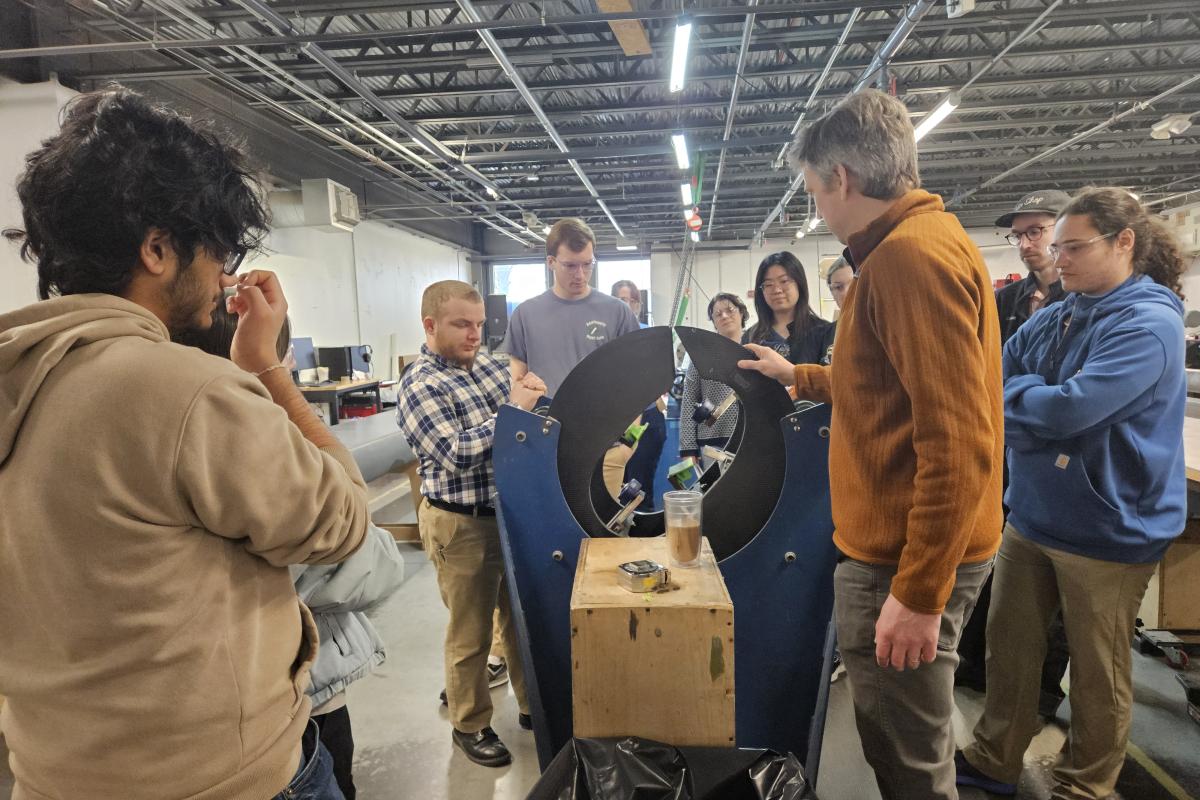
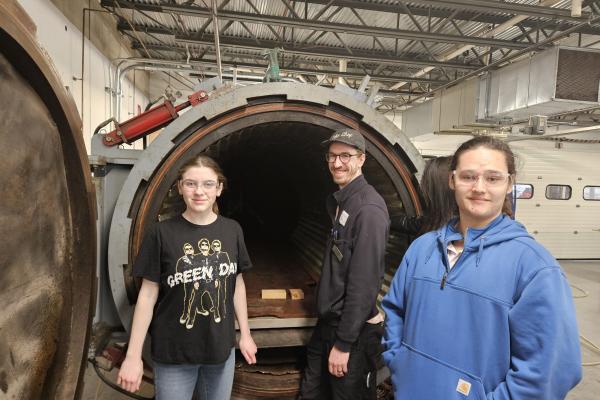
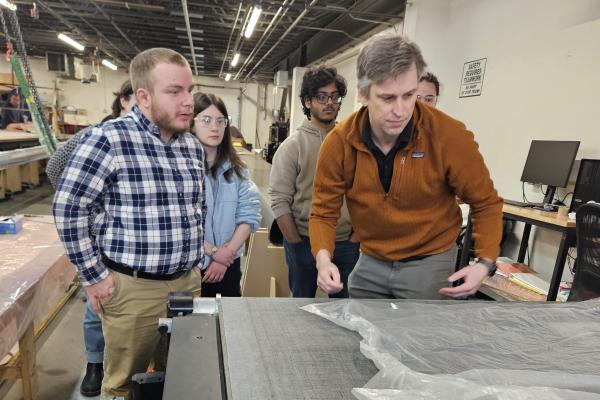
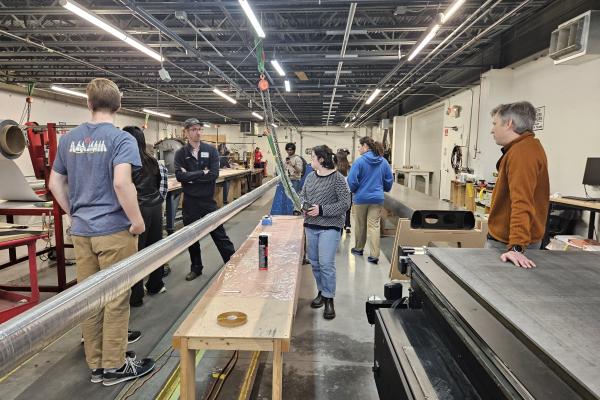
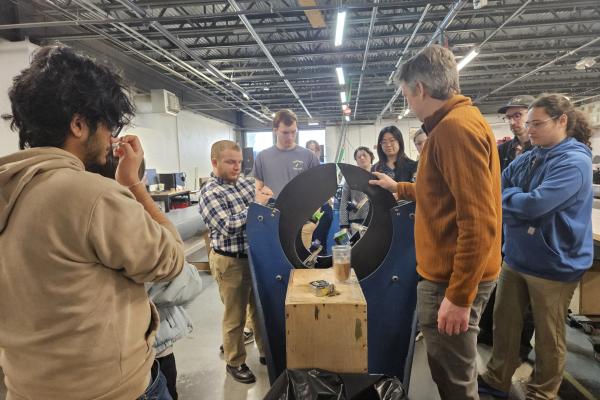
Moore Brothers is a small company producing custom, low-volume composite parts and tooling for large-scale composite manufacturing. Their work ranges from custom sailboats to experimental aircraft and drones.
During our tour of the manufacturing floor, we were impressed by their 80 ft long, 5-axis CNC that can machine massive molds in one go!
We also spoke with their engineering team and learned how they design molds and lay fibers to precisely control the strength of their parts. One takeaway I am bringing back to Olin is their different mold materials for different applications. For production quality molds, they use fiberglass and gelcoat on a positive mold. For smaller runs, an MDF negative does the job.
More Photos from The Moore Brothers Company
Ellie Mullen ’29
“I found this tour extremely valuable as a unique in-depth look into the industries that we will potentially enter as engineering students. The experience and motivation I gained from this trip have helped me feel confident in my path forward as an engineer."
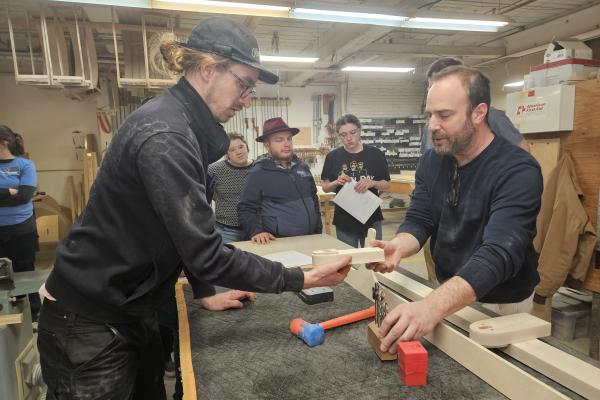
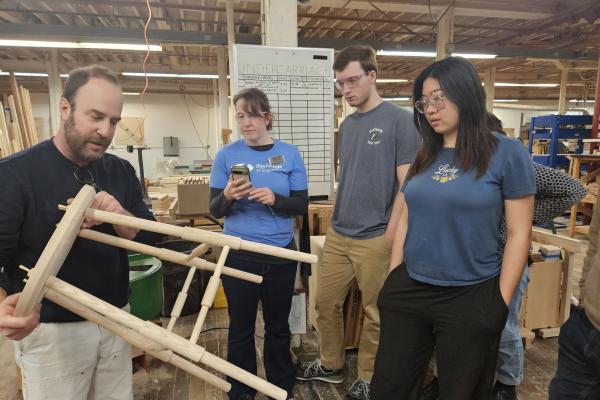
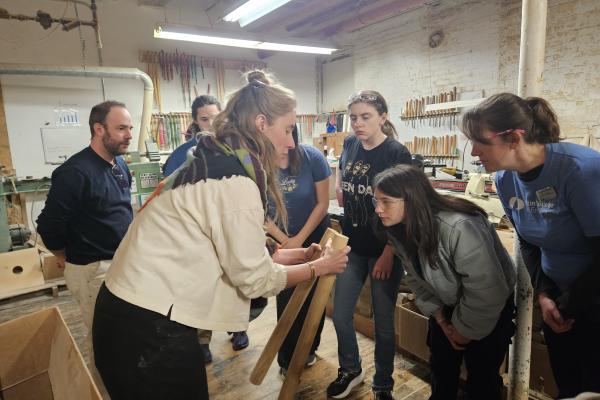
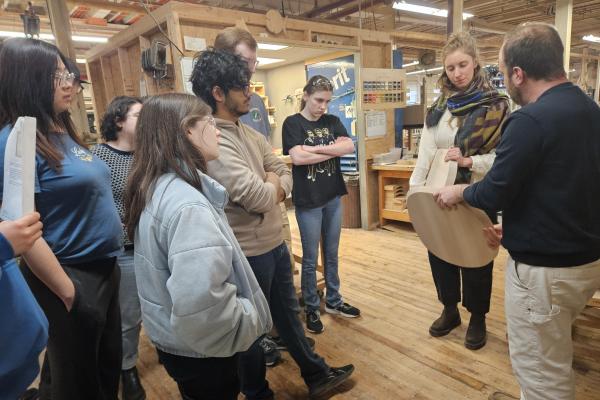
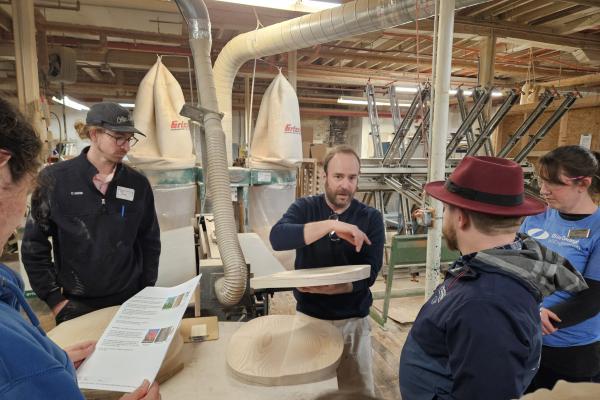
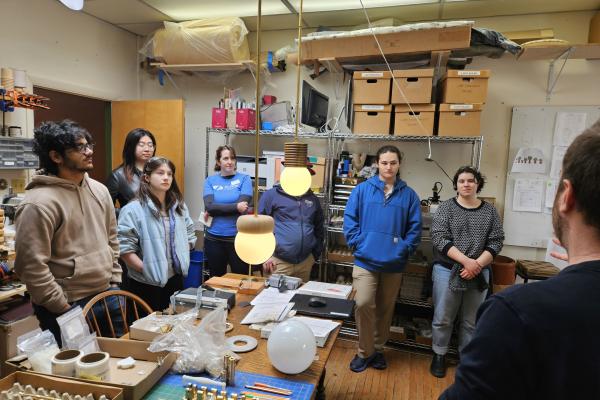
Our last stop was O&G Studio, a small and very square brick industrial building perched next to the port of Warren, RI. Although it didn’t look like much from the outside, inside was an innovative custom furniture design and manufacturing company with interesting methods for managing production.
Their small team of 3-ish engineers not only designs furniture and creates templates for signature designs, but also helps to optimize the production line’s efficacy, repeatability, and labor cost. Working in conjunction with a materials manager, the engineers create and test signature designs before passing them off to the skilled woodworkers under O&G’s employ. From there, production begins; a process that takes pieces from stock to CNC machining, to the hands of those woodworkers, to a worker who assembles electronics as needed, although their main seller is their massive collection of Windsor chairs!
O&G is frequently set apart from others in the field by their high volume of custom orders and intensive staining process, allowing them to create very saturated colors in woods that don’t take color well. To my eye, however, what really keeps them in business is their carefully managed process. To make a good chair is one thing; to make 100 is entirely another.
I was extremely grateful to have the opportunity to witness and ask questions about O&G’s process, and this experience made me think carefully about the creative team processes I am managing in my Olin classes. I learned a lot from O&G that I will carry with me through my Olin teaming experiences, my career experiences, and most importantly, my hobby of woodworking!
More Photos from O&G Studio
Ellie Mullen ’29
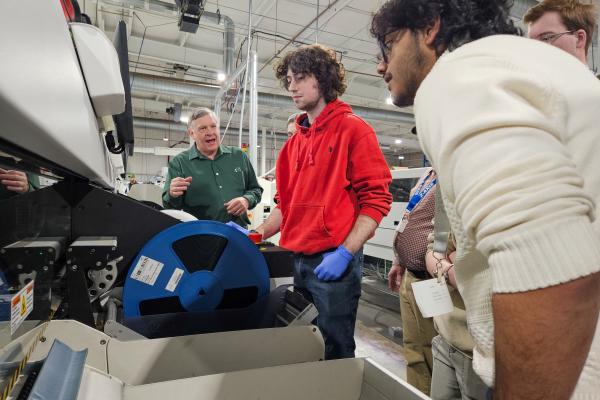
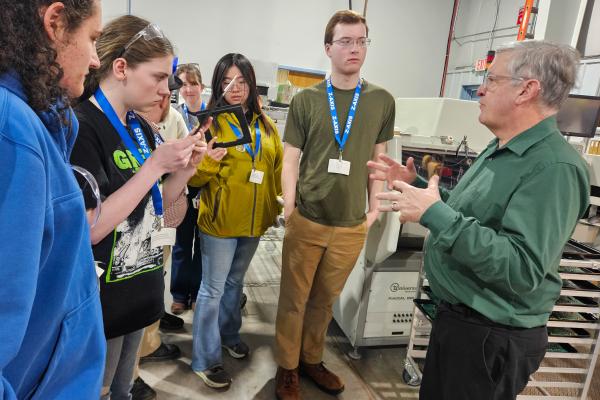
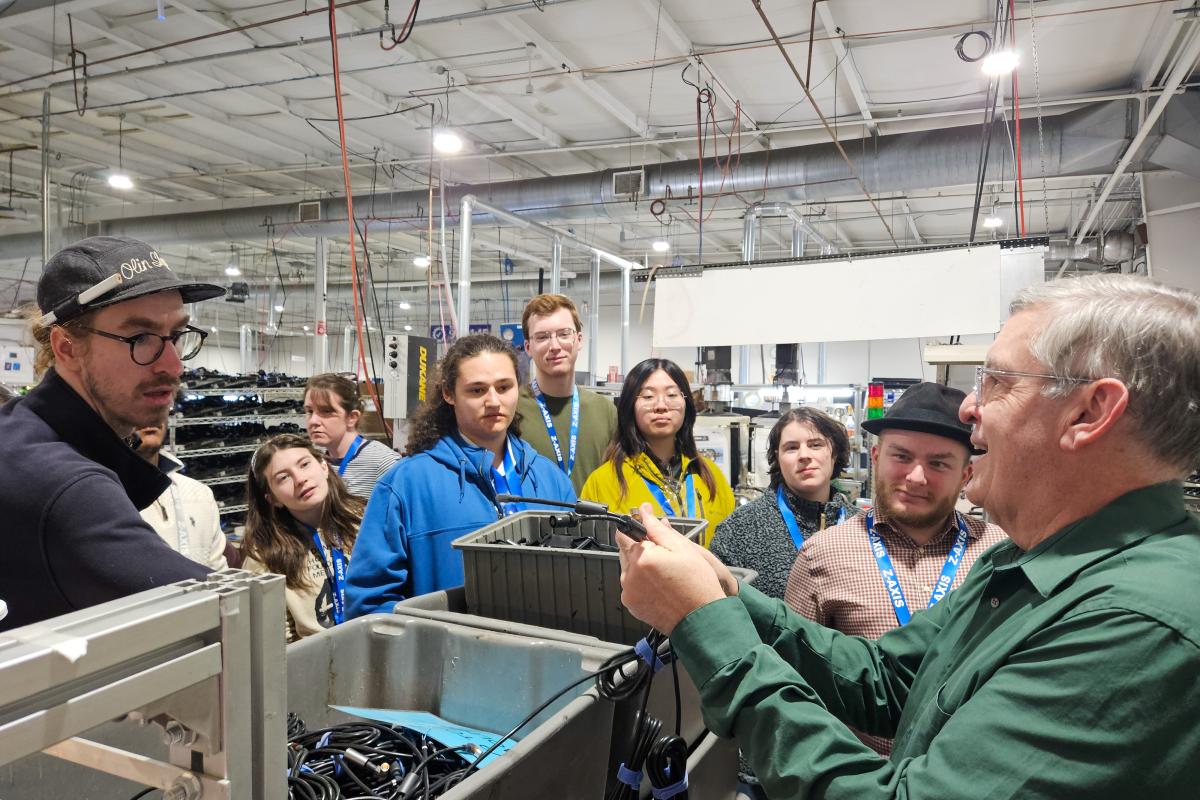
When I walked into Z-AXIS/Bear Power Supplies, I was fully prepared to check out. The day was rotten freezing, I was tired and stiff from the van, and I’m a Mech-E, I knew next to nothing about electronics, period.
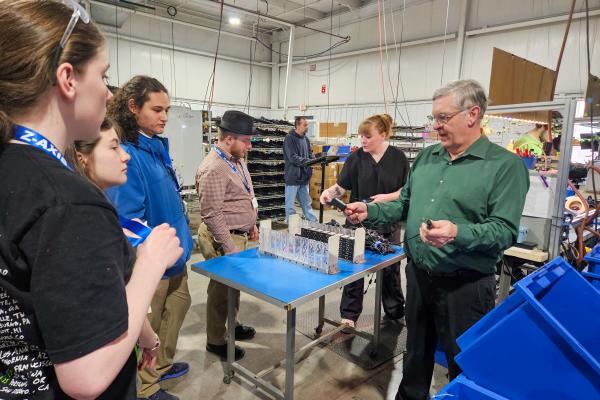
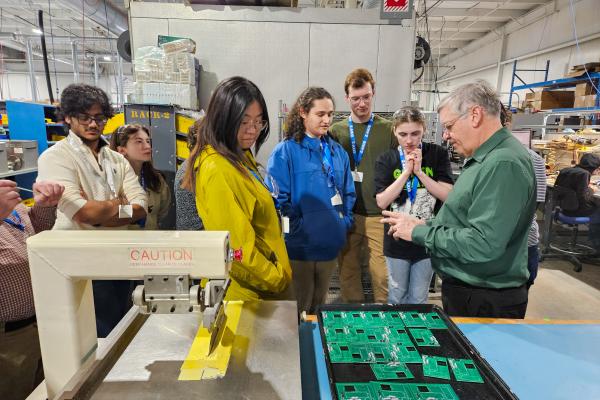
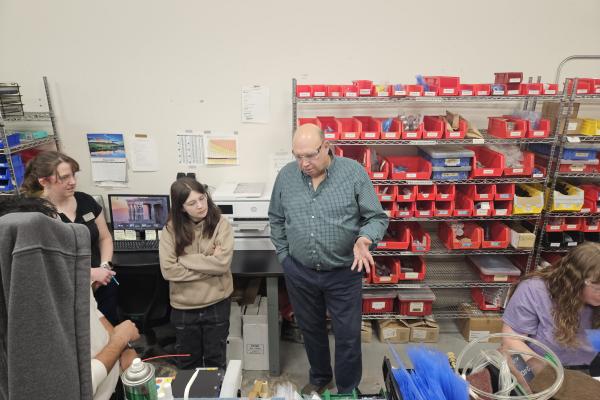
As I listened, though, this tour opened my eyes to the extremely interesting world of electronics manufacturing. Z-Axis’s methods for storage, automatic part placement/soldering, and epoxy-podding power supplies were all fascinating to me. Without even mentioning the process of creating the power supplies and circuitry, the design considerations were more complex than I could have imagined. The sheer efficiency with which parts were placed by the CNC pick-and-place machine shocked me, and it was difficult to imagine just how much labor machinery like this saved.
Even with the advanced machines that we saw, the labor required for electronics manufacturing specifically was surprising to me. The number of workers on the line far exceeded what we saw in the shops we previously visited, and all of them were intelligent, polite, and helpful.
I came away from this tour with a new understanding of and interest in electronics manufacturing that I believe will serve me well even as a Mech-E. After all, what are machines without electronics to run them? With the information I learned, I hope I can avoid reinforcing the stereotype that mechanical engineers apparently have in the industry.
More Photos from Z-AXIS & Bear Power Supplies