STORY: From Microbes to Markets: “Microbial Diversity” Course Explores Intersection of Science and Entrepreneurship
From oxybenzone in sunscreen that kills coral reefs to polylactic acid plastic scraps from 3D printing, our world is full of chemical compounds that can be pollutants, persistent wastes, or underutilized resources waiting to be transformed into something useful.
In Olin’s “Microbial Diversity” course, students spend an entire semester in the lab thinking through challenges like these by working with microbes that can degrade or convert unwanted compounds. Then, they apply entrepreneurial thinking to consider how their scientific discoveries could be translated into sustainable, marketable products and services.
Taught by Jean Huang, associate professor of biology at Olin, “Microbial Diversity” is part advanced biology course and part venture creation course, developed with participation from faculty and staff at Olin with expertise in entrepreneurship.
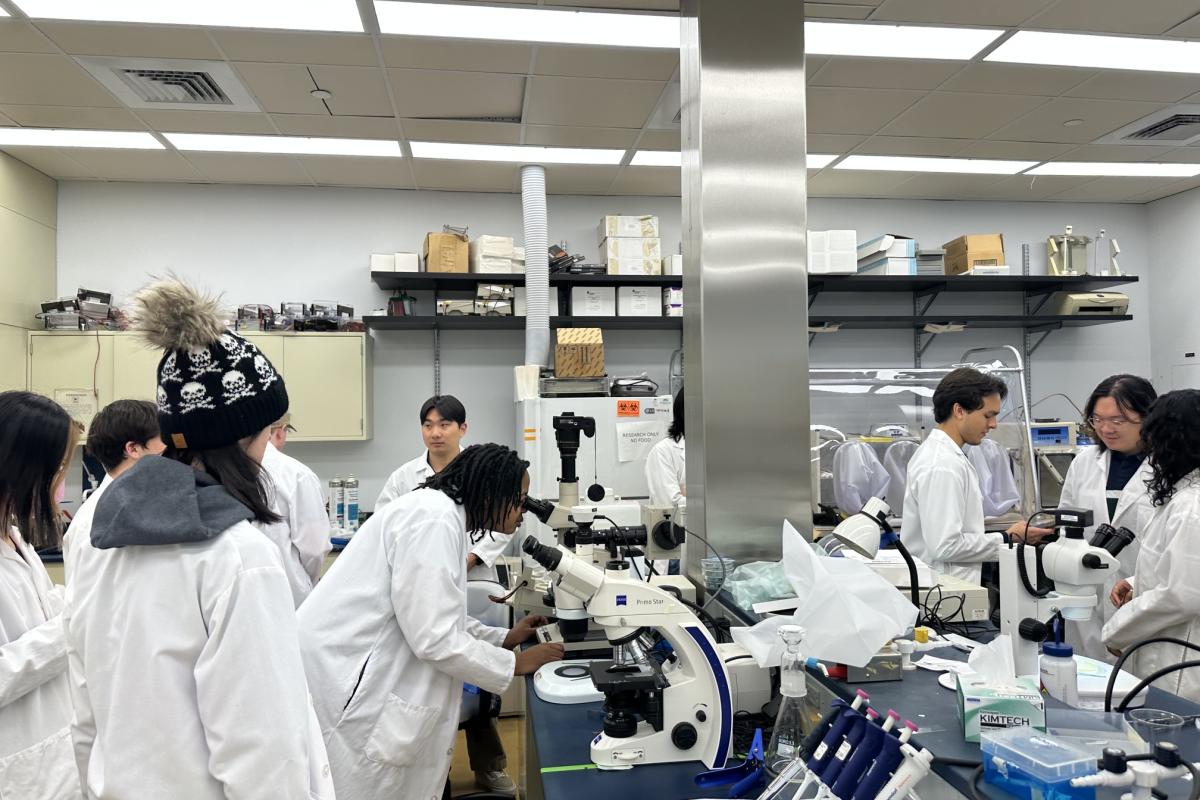
Students enrolled in Olin's Microbial Diversity course are seen conducting lab-based research in 2026.
In the first part of the course, students spend 15 weeks on a lab-based research project. They each select a compound they are interested in investigating—such as allicin, which causes lingering garlic breath, or chitin, the tough polysaccharide that makes up lobster shells and the cell walls of fungi—and learn to apply techniques in the laboratory to identify microbes from the environment that are capable of degrading or repurposing them.
“Microbial diversity is vast, and microbes are the best biochemists,” says Huang. “The chances of students finding a microbe that can degrade or transform a compound of interest are high. The class collectively explores a small part of this diversity through their research projects.”
From the Lab to the Marketplace
Next, students apply entrepreneurial thinking to their scientific discoveries, building off of frameworks they learned in Olin’s foundational entrepreneurship course, “Products and Markets,” taken by all students in their first year.
“This aspect of ‘Microbial Diversity’ gives students the opportunity to explore the context of their new knowledge as an entry point for entrepreneurship, asking: Who might benefit from this? How could this become viable? What additional scientific evidence would be needed?” says Huang.
For Sascha Jalinous ’28, an E: Bioengineering student, the opportunity to conduct authentic research was a major draw.
“I have always had a strong interest in biology, and after taking an Olin course called ‘Designing Better Drugs,’ I realized how much I enjoyed lab work,” says Jalinous. “This course sounded like a great combination of lab work and research in an area I knew very little about but wanted to explore.”
“I have always had a strong interest in biology, and after taking an Olin course called ‘Designing Better Drugs,’ I realized how much I enjoyed lab work. This course sounded like a great combination of lab work and research in an area I knew very little about but wanted to explore," says Sascha Jalinous ’28, a Microbial Diversity student.
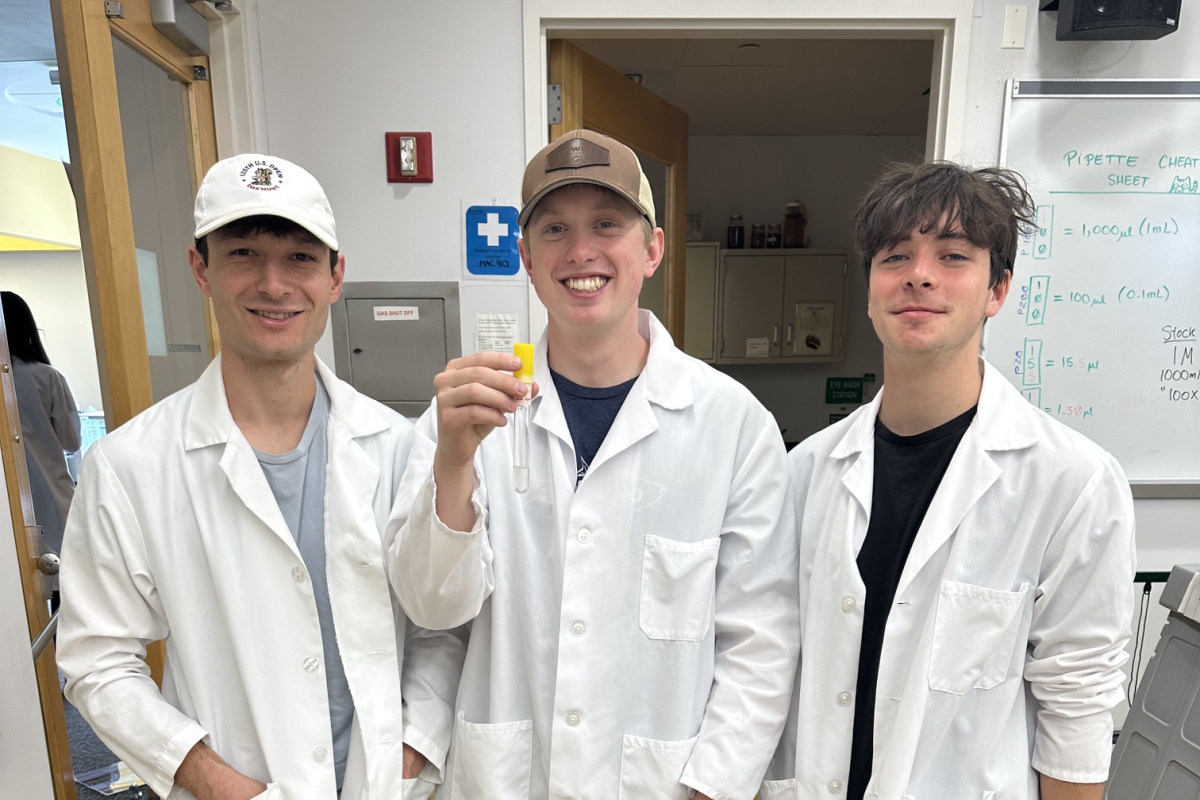
Three Microbial Diversity students pose for a group photo.
Jalinous focused her project on naphthalene, a polycyclic aromatic hydrocarbon (PAH) commonly found in environmental pollution. Throughout the semester, she cultured microbes from soil samples, isolated bacterial species, and used molecular biology techniques to identify an organism capable of degrading the compound.
“After sequencing and analyzing the DNA, I identified my bacteria as a Stenotrophomonas sp, which is also a known degrader of naphthalene,” says Jalinous. “It was super cool to create my own culture and discover a bacterium capable of breaking down a pollutant.”
The course’s structure reflects Olin’s project-based, interdisciplinary, and student-driven approach to learning. While all students learned common techniques and met shared milestones, they had significant autonomy to pursue questions that aligned with their interests.
“Many of the projects were inspired by students’ desire to protect the environment, such as by degrading toxic compounds found in pharmaceutical residues or pesticides,” says Huang. “The open-ended nature of the work allowed them to explore topics they were genuinely curious about while developing rigorous scientific skills.”
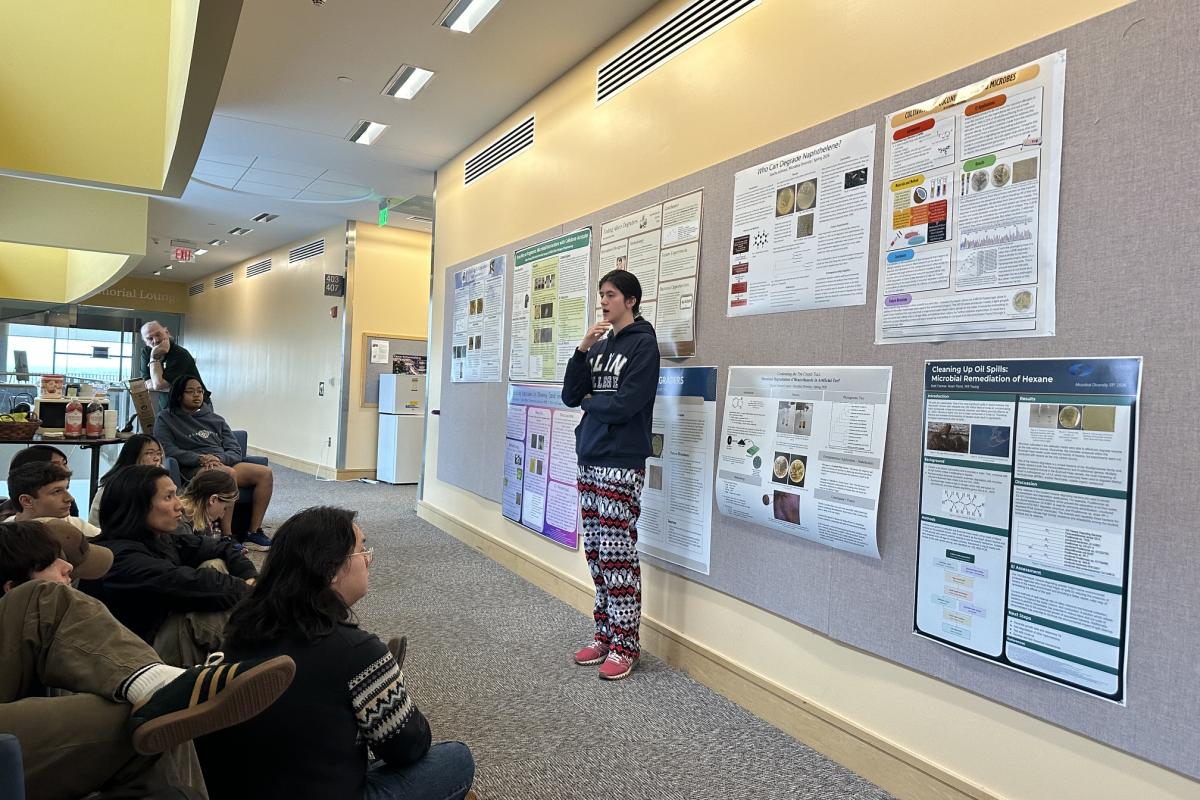
A Microbial Diversity student discusses their research project at the course's public poster showcase.
Expert Input
In addition to their laboratory work, students also learned about technology commercialization, intellectual property, and startup development with microbiology through case studies and conversations with experts.
Guest speakers included a local patent attorney who helped students understand how scientific innovations are developed and protected, as well as Olin alumna Victoria Hsiao ’10, director of biology at the biomanufacturing company Amyris. Hsiao discussed how companies adapt to changes to the marketplace while working with microbes.
“Bringing industry experts and guest speakers into the course provided students with some really valuable real-world lessons and advice,” says Huang.
“Bringing industry experts and guest speakers into the course provided students with some really valuable real-world lessons and advice,” says Jean Huang, an associate professor of biology at Olin College.
The semester culminated in a public poster showcase and formal scientific reports that integrated both scientific findings and technology-to-market considerations.
For Jalinous, the experience reinforced the value of interdisciplinary learning.
“Learning new things opens up so many possibilities,” says Jalinous, who hopes to attend veterinary school after graduating from Olin. “Before taking this course, I didn’t know much about microbes. Now I can see how understanding biology can inspire future designs and solutions. The hands-on environment here really encourages learning and personal growth.